
Dangerus surf – Backyards/Sunset Beach
Escaping the grueling reality of forced labor in West Berlin, a fifteen-year-old boy crosses the Iron Curtain for the first time. Years later, confronting the Sunset Beach dangerous surf on the North Shore of Oahu triggers memories of that unexpected romance under the crosshairs of armed guards—and the ultimate pursuit of absolute freedom.
Home / Stories
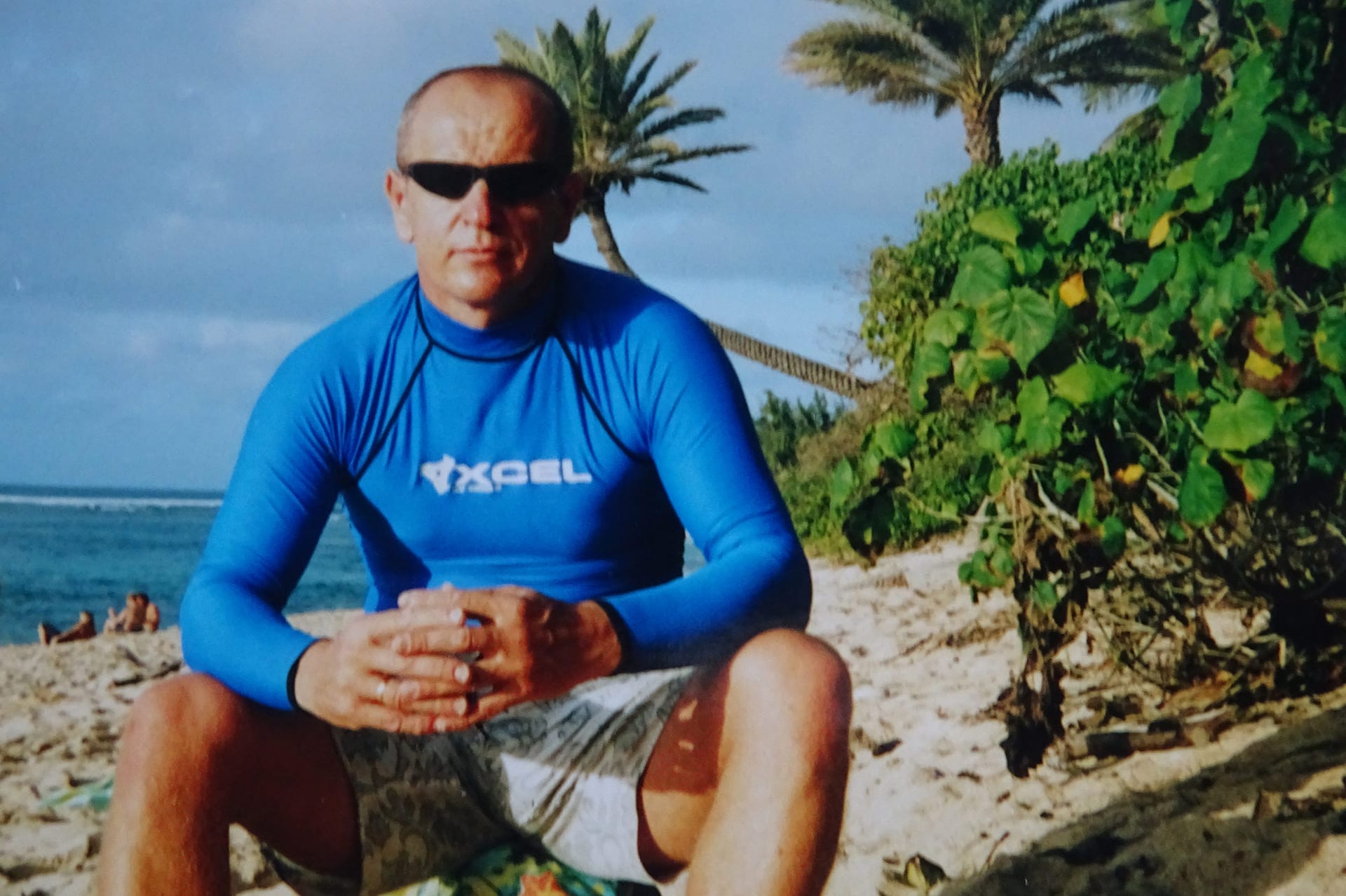
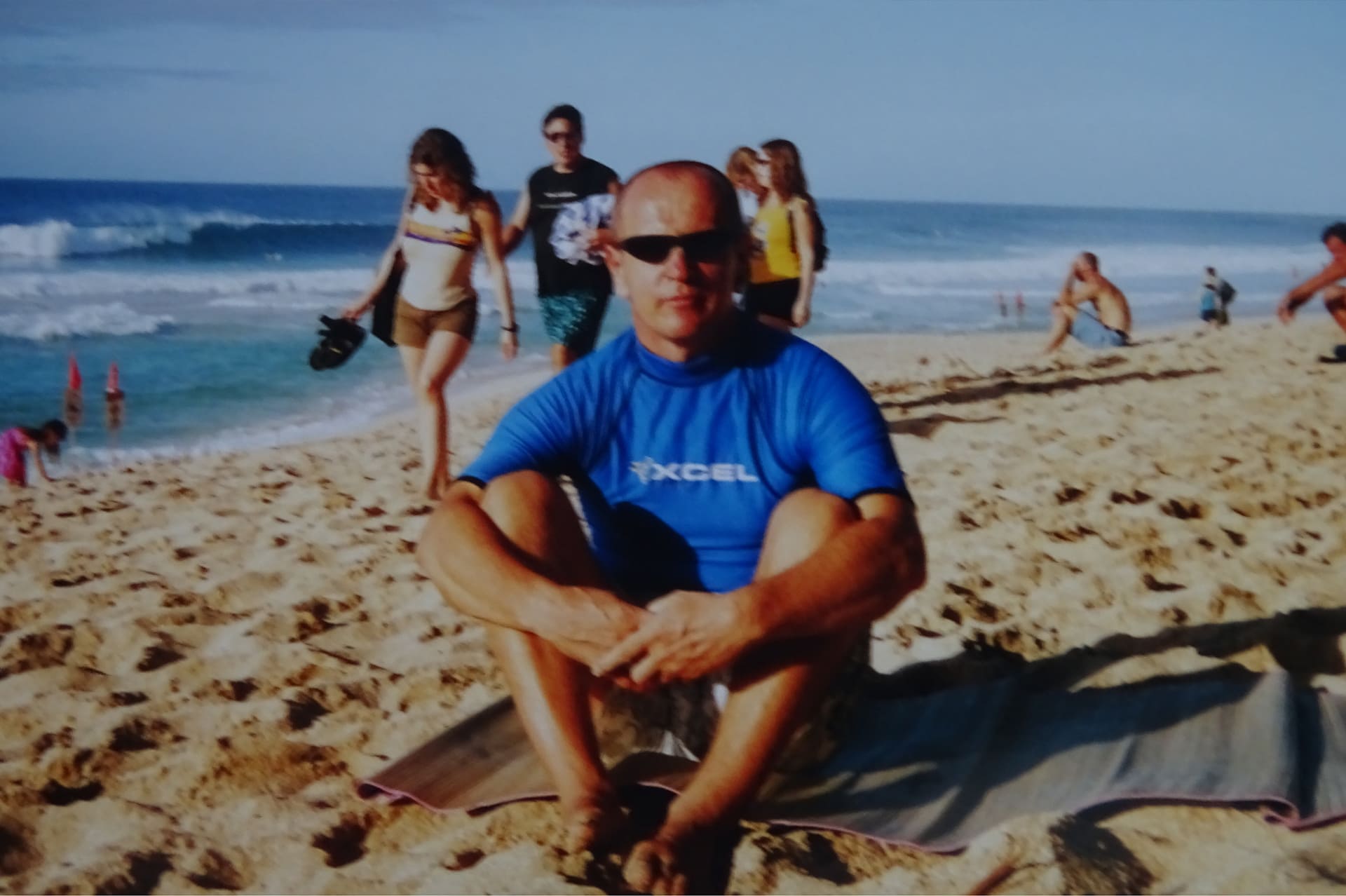
Chapter I – DANGEROUS SURF
Backyards / Sunset Beach
In 1992, we visited the Hawaiian island of Oahu for the second time. The year before, we had met a Mexican guy named Ralph.
During our first vacation the previous year, we had stayed at the Turtle Bay Hilton Hotel, which charged us $285 a night. When we said goodbye to our Mexican friend, Ralph, he made us a proposition: if we planned to come to Hawaii again, we should call him first. He promised to find us a private place to stay; we just had to tell him when and where to look.
Since my home country was still in a state of war, and we were planning our usual winter vacation, we thought about the offer from our friend from the North Shore in Laie.
We thought back to our first Hawaiian vacation, which had been very expensive. We had originally only intended to visit Hawaii once, but since the opportunity presented itself and our friend might be able to find us cheaper accommodation, we decided to travel to Hawaii again. At least, we hoped we would be lucky enough that our friend would do us this favor, as promised.
Without our Mexican friend Ralph’s offer to find us lodging, we would never have dared to waste even a single second thinking about throwing so much money out the window for a vacation like we did the previous year, in 1991.
The year before, at a hotel on the Kaanapali Coast in northwest Maui, we were charged $470 for just one night. Since the exchange rate of the US dollar to the German Mark was 1 to 2.35, we had to pay almost a thousand Marks for a single night, while my monthly earnings as a roofer’s assistant were only 1,500 Marks.
This year, Ralph had put in a lot of effort, just as he had promised. He found us accommodation in Kailua, on the southeast side of Oahu, and negotiated the price down to $75. He told the owners that we were young and didn’t have much money. The landlady, Lucinda Coffey, accepted his polite request and lowered the price.
Our flight to Los Angeles went smoothly. I had brought my own surfboard from Berlin during our first trip, and back then, it flew for free. You just had to register the board when buying the ticket. This year, however, the United Airlines employees in Los Angeles unexpectedly demanded $75 from us.
Since we had been assured in Germany when buying the tickets that it was still free, we complained to the United Airlines agent. She explained that starting this year, it was no longer free. We continued to argue and refused to pay.
The woman at the counter became unfriendly and seemed annoyed. She told us loudly that she could charge $150, but she was only taking $75. Since she intimidated us with this, we were just glad she only took the $75, as she said. We had no choice but to pay. (The return flight from Hawaii to Berlin turned into a disaster; they demanded $300, which we had to pay since we were already at the airport).
Since we had decided to come here every year, I made up my mind during the flight from Los Angeles to Honolulu that, in the future, I would leave my board in Berlin. Instead, I would buy a board here and leave it with our friends.
After arriving at the airport in Honolulu, we picked up our suitcases, rented a car, and headed straight for the North Shore. Just before Pearl City, we got on Highway 2. Right before Wahiawa, we left the highway and continued on the country road through Wahiawa, a small town in the middle of the island.
To our left was a military area with its barracks. As we left Wahiawa and drove along the country road toward the North Shore, we saw massive Dole pineapple plantations on both sides of the road.
Since the plantations are situated a bit higher up, as we drove down the hill against light oncoming traffic, we could see the ocean in the distance. The first small town on the North Shore is Haleiwa.
From Haleiwa, we turned right onto the coastal road, driving past Sunset Beach and the Turtle Bay Hilton on our left, where we had spent four and a half weeks the year before. After that, we drove through Kahuku and finally arrived in Laie, right on the northeast side of the island.
This was where Ralph, Susan, and their five-year-old son, Matthew, lived. As we arrived in near darkness and turned left onto their property, we were immediately greeted by barking dogs: a funny, cuddly dog named ‘Hose,’ white with brown spots and incredibly large ears that almost dragged on the ground, and a black, watchful dog named ‘Sandwich.’ Susan’s father lived on the lower floor of the house, while Susan, Ralph, and Matthew lived on the upper floor. The house belonged to Susan’s father; she is Chinese.
The house is built high on a cliff, about four meters above sea level and only two meters away from the ocean and the crashing waves.
Because they were expecting us—their first visitors from Germany—the door upstairs opened, and all three stepped out under the small light illuminating the stairs we had to climb. Even from a distance as we got out of the car, we could see they all had friendly smiles and were excited to see us. After all, they were expecting friends from Germany. They all liked Germans and loved talking about German soccer. Ralph is an enthusiastic soccer fan, his young son plays soccer, and Susan plays women’s soccer too.
After we walked up the stairs, greeted everyone, and sat down upstairs, Mischko took over the English conversation. Since I didn’t speak any English, just like the year before, I just sat there grinning. She translated everything they talked about for me. When it was finally time to drive to Kailua, where Ralph had found the accommodation for us as requested, he gave us the address. He had already called the people in Kailua earlier to let them know we would be arriving tonight and were just leaving.
After saying goodbye to Ralph, Susan, and Matthew, we faced at least an hour’s drive along the east coast of the island. Since we had just arrived from Germany and had been traveling for a whole day and night without sleep, we were both exhausted.
Therefore, driving the winding coastal road in the dark was quite exhausting and adventurous. I had to push myself and concentrate to stay in my lane on the two-lane road with oncoming traffic in the darkness. Sometimes we drove slightly uphill, then downhill again.
Sea level was no more than three meters below us. When I looked to the left toward the ocean, it was pitch black. To our right were mountains, also shrouded in total darkness. Occasionally, we drove through small villages with very few houses and barely any lights on.
After about an hour of driving through the darkness, a larger town appeared on our left: Kaneohe. Here, there was a street sign pointing toward Kailua.
As we left the town, we drove toward Kailua, once again through total darkness. The ocean was no longer visible. It felt like we were driving through a jungle until the first streetlights appeared about fifteen minutes later. It was almost nine o’clock when we reached a single traffic light and an intersection. Until then, we hadn’t seen a single house. We had found Kailua, but the street and the cul-de-sac we were looking for were hard to locate.
After several stops, we came across a gas station and a store called Safeway. Whenever we rolled down the window to ask someone for directions, a pleasantly warm, fragrant, and humid air blew into the car. We were told to take the four-lane road (two lanes in each direction) down to the left and then turn right. After about five hundred meters, we saw military guards and the entrance to a barracks. We turned around just before reaching it.
After turning around, we saw a small side street on the left after about two hundred meters and turned into it. Since there were still hardly any houses visible, we felt like we had ended up in a village. After driving around for a while, we coincidentally spotted two kids on bicycles having fun on the lonely, unlit street in the dark.
As I reached them, I slowed down. Mischko opened the window and asked for Kaimalino Street and the house number. The boy, who was about twelve years old, told us to follow them. Two minutes later, we were at Tom and Lucinda’s house. We hadn’t known it was the last house in this cul-de-sac. In this street, only a single streetlight illuminated the roundabout where lost drivers could turn their cars around.
As we got out of the car and walked toward the house, we could hear the roar of the ocean behind the building. After we rang the doorbell, a woman barely older than me opened the door: long hair, slender, dressed in light Hawaiian clothing. She smiled at us under the small entrance light.
When she started talking, I realized I had never heard anyone speak so kindly before, and she had such a pleasant, beautiful, and clear voice.
After chatting for a minute, she came outside and led us up the stairs to our room. She showed us everything: the bathroom, a small balcony, and the huge bed. It was a really beautiful and clean room.
CHAPTER II – Paradise in Kailua
The next morning, we were unexpectedly awakened very early by loud birdsong. It was only five o’clock. In the background, we could hear the rustling and swaying of the palm fronds.
When I opened the door, the birdsong was so loud and the swaying palm leaves made such a tremendous noise that I felt like I was in the middle of a deep jungle. At least fifty birds were hiding in the palm trees, chirping so loudly and making such a racket that they had woken us up. As I stepped out onto the balcony, the moist sea air filled my nostrils.
The nearest house on the south side, hidden behind several palm trees where the birds were so loud, was about ten meters away. That house also had only one floor and a flat roof.
The roar of the ocean could be heard from the left. Looking across the street from our cul-de-sac to the right, I saw another single-story house. More houses could be seen in the distance, back the way we had come the night before. All these houses had gray roofs. They weren’t made of brick; they resembled bricks but were gray and made of wood.
The area was beautifully maintained with palm trees all around. Behind the houses, far in the background, a green-covered mountain was visible. At the same time, from my right, I heard the same loud, unfamiliar birdsong. I felt as if I were in a jungle paradise.
Since we didn’t have anything to eat, we drove to the Safeway we had passed the night before to get groceries after taking a shower. Leaving the cul-de-sac, we navigated the small curves where the kids had guided us to the house the night before.
As we drove slowly, we admired the surroundings. It was a quiet area with only a few scattered houses on large plots of land. I figured we couldn’t have found anything more beautiful on this island for $75. Thank you, Ralph, I thought of our Mexican friend.
He was a true angel. We reached the main road, which led to the right toward the military base. (At this point, we didn’t know the military base was to our right. We had seen guards, but neither last night nor at this moment did we know what it was. It wasn’t until the following year that our hosts told us the barracks weren’t far from this cul-de-sac).
When we reached the four-lane road, Mischko remembered that we had arrived from the left the night before. We drove under a clear blue sky, the sun shining brightly. On both sides of this two-lane road were bushes with red Hawaiian hibiscus flowers—the same flowers we would later see printed on T-shirts and shorts in the coming days.
The fresh, salty night smell of the ocean, combined with the scent of the trees and their fresh blossoms, had been flowing through our open windows and filling our lungs the entire time. There are about eight to twelve botanically recognized species of Plumeria trees. They are known above all for their magnificent, colorful flowers, which are rarely a single color and usually display fascinating combinations. The most popular colors of Plumeria trees (also called Frangipani) range from radiant white to delicate pink, vibrant yellow, bright red, and multicolored.
The dew on the lawn sparkled in the sun. The scattered palm trees, some standing in groups of three and adorned with green coconuts, greeted us for the first time that morning. “Aloha, you two. Welcome to Kaimalino Street. You are in paradise.” Whether we wanted to or not, we were aware we were in paradise. We were both inwardly happy to be staying in this cul-de-sac where absolutely no cars drove past. That’s why it was so quiet. We observed the large properties on both sides. Because of the quiet, the cheerful, happy chirping of the birds could be heard from all directions, making us feel as if we were somewhere in the wilderness.
The sound of music playing in our ears from the car radio came from the local Kailua station. Our car smelled brand new, and the air conditioning was running. We both agreed: this area was a true paradise.
After a minute on this main road, we turned right at the gas station toward Safeway. This grocery store had a huge parking lot, typical for the USA. Running alongside the parking lot, hidden behind the trees, the two-lane road continued north, the direction we had arrived from the night before.
When we got out of the car in the almost empty parking lot, it was quite warm and humid outside, just like in front of the house where we had slept. The birds were chirping here too, making an incredible amount of noise. The fragrance from the tree blossoms was unique here as well. The trees were massive; with all their blooms, each tree looked like a giant bouquet of flowers. The sun was pleasantly warm, but we were glad to get inside the store.
Inside, it was really, really cool. We bought everything we needed for breakfast. Once we had everything, we were glad to be back outside because the air conditioning in the store was set brutally cold; we were freezing inside. It was just too cold for us. As we walked to the car, we wondered how the employees could stand working there all day when they were dressed as lightly as we were.
We enjoyed our first breakfast on the balcony amidst the jungle noise: the chirping of birds, the roar of the ocean, and the rustling of palm leaves. The previous year, we had spent four and a half weeks on the North Shore of Hawaii, but we had eaten breakfast at the hotel with a beautiful view of the surfers and the ocean. If I had to choose which experience I preferred—breakfast with that view or on this balcony with all the noise under the palm trees—I think I would prefer the noise and the birdsong, because it made me feel like I was somewhere deep in the Brazilian jungle.
In the days that followed, we repeatedly drove to the Safeway grocery store, turned left at the traffic light onto Kalaheo Avenue, and drove about ten minutes to the public beach in Kailua. Meanwhile, we had also taken a few trips around the island to avoid doing the same thing every day. Whenever we arrived at the public beach in Kailua, the parking lots were usually full. We often had to wait between five and ten minutes for the first beachgoers to leave the parking lot and head home. Kailua had two windsurfing shops; one belonged to the Hawaiian world champion Robby Naish, and the owner of the other sailboard shop was a German.
These two shops had employees who brought countless windsurfing boards to the beach on their trailers every morning. They would spread their sails out on the grass and wait for the tourist customers from Honolulu to rent the boards.
CHAPTER III
After about two weeks here in Kailua at the public beach and a few trips around the island, we decided to visit our friends in Laie today. Afterward, I planned to go windsurfing for the first time this year on the North Shore off Sunset Beach, because the radio station reported strong east winds.
After breakfast, as we turned right and headed north at the Safeway store where we had already shopped this morning, we drove toward Kaneohe. When we reached Kaneohe about fifteen to twenty minutes later, we continued along the coastal road on the east side. With the ocean on our right, the mountains were now on our left.
Now, during the day, we were well-rested and completely amazed by the beauty of the area we were driving through. The locals where we were staying had told us that certain travel magazines had named it one of the most beautiful roads in the world.
As we drove, we thought out loud that one simply couldn’t experience anything more beautiful in life. The perfect music, being young… Even if we had only experienced this once in a lifetime, I would have been overjoyed, but this year we were here for the second time. At that moment, I could find absolutely no words, because we were so incredibly happy. While winter reigned in Berlin, we were allowed to stay here for six weeks and escape the cold.
We drove past several small towns that were now on our left. One place immediately etched itself into my memory forever: Kaaawa. Four “A”s out of six letters in total. When we had driven from Ralph and Susan’s to Kailua in the dark that first night, we couldn’t see much. Judging by the appearance of the houses in the scattered settlements, it looked as though poorer Hawaiians had settled here, living very far from the grocery stores.
In that moment, I thought to myself: I would rather be poor and live here than be rich and live in Berlin. You have the ocean and the fish right in front of you, and the hustle, bustle, and stress of a big city are far away.
Once again, our car was an open convertible, allowing us to experience everything so naturally and up close during the drive. The wind blew around our ears from the east, now from our right side, and we could smell the moist ocean air. After about an hour, we drove past the Polynesian Cultural Center on our left and took the final curves before Laie, where our Mexican friend lived.
Arriving on the north side of the island, we soon turned right off the main road and drove slightly up a hill or small mountain. Once at the top, we turned right again. A few seconds later, we reached a fence made of tall green bushes. After several meters of these tall bushes, there was an opening intended as the driveway to the house. Susan’s father probably hadn’t had the money to build a real fence and a gate.
As we turned left onto their property, the house was at least thirty meters away from the street. No sooner were we on the property than we were greeted once again by loud dog barking. It was the same two dogs that had greeted us so unfavorably the first night. We remembered both of them from the previous year.
Only the black dog barked really aggressively; he was a true guard dog. He looked like an attack dog, but he was probably a mix of some sort. He was as big as a full-grown German Shepherd, while the second dog was slightly smaller. This one was white with brown spots. With his large ears hanging almost to the ground, he radiated more of a friendly welcome.
He wagged his tail as if he were happy, even though he didn’t know who was pulling into the driveway. Our friends called the big black dog “Sandwich,” while the cute, short-legged, brown-and-white spotted dog was named “Hose” (José)—a name that sounded much more Mexican.
Maybe I’m wrong, and the colorful little dog did recognize our car after all; at the very least, he was friendly and looked really cuddly. Since it rains the most here on the North Shore of Hawaii, this dog had probably laid down in the red mud of the Hawaiian earth to cool off in the heat. The white parts of this dog were now almost entirely brown and red. He looked as if he desperately needed a proper shower. There was a water hose visible in front of the garage; he was probably showered every day.
As we slowly drove the thirty meters from the street to the house and parked, the door upstairs opened, and Susan and Ralph came out to greet us. We sat with our friends for about an hour that day. The entire time we sat there, I admired their terrace and the waves crashing directly beneath it. Their house was built right on a rocky cliff. In calmer waters, I might have dared to jump in despite the sharks, but today it was impossible and would have been deadly. The waves were simply too big.
Ralph wanted to know where we planned to spend our day. Mischko told him that we wanted to go to Sunset Beach and that I wanted to windsurf. Because he was a local, he knew and could see exactly what was happening four meters below his balcony—a massive surf—and he knew what conditions would be like at Sunset Beach, where I wanted to surf. So, he gave me a bodyboard belonging to his son, Matthew, so I could at least catch a few waves if there wasn’t enough wind today.
All three of them were incredibly friendly. They had smiling faces the entire time. We could tell we were truly welcome in their home. Little Matthew had such a charming laugh and talked to us like a grown-up. The family seemed overjoyed about their friendship with people from Germany; you could clearly see it on their faces.
As we chatted, we brought out a surprise for our friends from the North Shore. Since I had bought a complete set of Adidas sportswear the year before and knew Susan liked to play soccer, we handed them our gifts. She was so thrilled with the sweatshirt featuring the Bayern Munich emblem. I had bought four of them the previous year—I hadn’t intentionally ordered it four times; it just came automatically with the purchase because I had ordered through a catalog. It was a complete set of Adidas gear that I had paid twelve hundred Marks for. That was the first time in my life I had spent so much money on sportswear, but I had done it because I wanted to be dressed properly in Hawaii.
The young son and his father also received German jerseys, and we had brought some German chocolate especially for our friends. This was another “thank you” to Ralph for taking care of our accommodation and negotiating the price down from $110 to $75. He told us how he had negotiated on the phone: “They are young people and don’t have much money.” That was how he had persuaded Lucinda, who managed the rentals, to rent the room to us at a lower price.
CHAPTER IV
As we left Laie, we drove past Malekahana Beach, which was hidden on our right behind tall trees and a forest. On our left was a green pasture with lush grass. Behind this green pasture, tall green mountains rose into the blue sky. Countless fat, black cows were scattered across the grass. While some grazed and ate, others stood by the electric fence, staring motionlessly across the road at the tall trees and the forest that separated the road from the ocean. They were probably longing for some shade.
Five minutes later, we had to slow down to twenty-five miles per hour because of a bus stop and a school zone sign. Shortly after, we drove past a small gas station on our right. This was the place we had stopped every morning the previous year to buy drinks when we drove from the Turtle Bay Hilton to Laie, where we spent every day completely alone on the beach. The ocean here in Kahuku was at least three hundred meters away and out of sight. We were driving straight through this small town, a place where only poorer native Hawaiians lived.
Not a single soul was to be seen in this small town, neither on the street nor in front of the houses on our left. Ten minutes after leaving this town, we drove past a golf course belonging to the Turtle Bay Hilton Resort on our right. Shortly after, we saw a sign pointing to the entrance of the hotel where we had stayed for almost five weeks the year before. Because we had wanted to be far away from Honolulu and the tourists, and since we had a rental car, we hadn’t minded sleeping there. But personally, I wouldn’t recommend anyone book that hotel, because they have absolutely no real swimming area. That hotel is meant more for golfers.
The hotel itself is built right on the ocean, at least another five hundred meters down from the main road. Ten minutes after driving past the hotel entrance, the road hugged closer to the ocean, and we reached Sunset Beach, which was completely overcrowded with visitors.
There were at least a hundred people on the beach, ninety-five percent of whom were tourists from Asia—from Japan, China, and Korea. Scattered among them on the sand, we saw a few locals, most of whom were sitting and staring far out into the open ocean at the massive surf.
Since the parked cars were facing the ocean with their headlights pointing slightly downhill, right as we arrived, a newer car reversed, its rear end backing up onto the asphalt right in front of us. We waited a moment for it to pull out.
Here in Hawaii, tourists were easy to spot because they all drove new rental cars, while the locals drove rusty beaters. What luck, a tourist is leaving, we thought.
We parked right in the middle of Sunset Beach, not far from the red lifeguard tower, which stood about eight meters to our left on the sand. A palm tree growing between the tower and the road provided some shade for the structure, as the sun was at its highest point right then.
Up in the tower, three athletic lifeguards were scanning the waves with binoculars. We didn’t see a single windsurfer out on the water.
That meant that today, I was the only one here at Sunset Beach with a windsurfing board. We sat in our open convertible for a while, looking straight ahead at the ocean and observing the three break zones.
About a hundred and twenty meters away from us, maybe even further, the waves broke for the first time in the distance. That was where dozens of surfers were gathered, barely visible to the naked eye. The waves seemed monstrous, which was why the lifeguards were constantly looking in that direction with their binoculars. After the wave broke out there for the first time, a wall of white saltwater foam rolled toward the beach.
After a while, just as the white foam had almost dissipated, the mass of water from that first wave hit a shallow bottom again. Here, the waves reared up a second time and broke again about sixty meters from the shore.
Then, the white foam slowly rolled forward again into the third break zone. The white foam had barely dissipated before the water current pushed the mass toward the beach.
Just before hitting Sunset Beach, a massive, dark blue wall of water rose about three and a half meters high. When the monster wave crashed onto the bottom and flattened out on Sunset Beach, about twenty-five meters away from us, the earth trembled and it thundered in our ears. Then the water pulled the white foam with it, flooding high up the sandy slope toward our parked cars.
When the white foam reached its highest point on the beach, at least two-thirds of the sandy shore was covered in it. Then the water retreated. It left behind a fascinating, sparkling, smooth, ice-like surface made of wet sand. By the time the white foam had almost completely retreated from the beach and reached the ocean again, the next wave broke and thundered, pushing the exact same white foam back up the slope, right to the feet of the curious visitors and spectators.
I watched the wave sets for a while because I intended to go into the water here with my windsurfing board and sail. When a set of waves was over, I estimated the timing, counting how long it took until the next set started thundering onto the beach. I had to know this exactly before I threw myself into a potential disaster.
As I watched this, I felt a tingling in my stomach and a bit of nervousness. Whenever I feel something like this, something unexpected usually happens. Today, too, I could feel that something was going to happen, but what? When something went wrong, I usually damaged my gear—my board, the fin, the boom, or the mast or sail got ruined. If everything with the gear was fine, then I ended up with injuries to my feet or ribs.
Out in the middle break zone, between the dozens of surfers and the beach, when the waves crashed, I could see the east wind blowing the ocean spray away toward Haleiwa.
After about ten to fifteen minutes, I was convinced that during the pause between the wave sets, I could dodge the shorebreak in time.
I asked myself: Is it really a good idea to rig my sail and get into the water right here in front of this massive crowd of tourists from Honolulu and the locals?
That made me a bit nervous. While I rigged my sail, most of the tourists’ eyes would be fixed on me, as if I were a star. Maybe that was what was making me nervous; it would just feel uncomfortable. Then I thought again about the surf and the three-meter-high waves relentlessly making a huge racket on the beach.
Ah, I’ll manage, I thought. There was still not a single windsurfer to be seen, neither out in the ocean nor parked anywhere here along the road. So be it, I decided. Shortly after, I got out of our convertible and pulled both large bags out of the back seats. My sail was in one bag, and my two-piece mast was in the other.
As I walked past the car, I had to step around the crowd of people sitting on a flattened tree trunk right in front of our car’s headlights. After stepping over the log, I placed my gear on the sand about three meters away, directly in front of the crowd sitting by our car.
My board with the stars was unique, the only one of its kind in the world. That was why I left it in its bag for now, before the tourists could start taking pictures. I knew this routine from Hawaii the year before. The moment a tourist saw my board on the secluded beach where we hung out last year, cameras were immediately pulled out and photos were taken.
With a crowd this big, it would just be too embarrassing for me. My board was custom-made out of fiberglass in Berlin. No one else on this planet had the same design and board as I did.
As soon as I pulled the sail out of one bag and the mast out of the other, I immediately started putting the two-piece mast together. Out of the corner of my eye, I saw one of the three athletic lifeguards running down the stairs of the tower.
I looked at the water and didn’t see anything alarming. Out of the corner of my eye, I saw that he was running directly toward me. When he reached me, he greeted me, smiled, and started talking. I told him that I didn’t speak English.
Mischko got out of the car, asked him what he wanted to say, and translated for me. “He says it’s not a good spot to go into the water with a board here. You should drive your car about four hundred meters down the road.”
“It’s much easier to get into the water with your board down there,” she added. I was a bit disappointed that he didn’t want me to launch right here at Sunset Beach. Well, it happened before I even got in the water, I thought.
Was this the reason for my nervousness?
Internally, I had already been a bit nervous about the threatening waves crashing flat onto the beach here, but I had watched long enough and calculated the timing, so I had been sure I would get out faster than the wave could catch me.
Today, as I write this, I think the lifeguard might have actually done me a favor that day. Since I had experience with heavy surf in my home country, I would have risked it myself, even if the three-meter wave had caught me right in front of hundreds of Asian and local spectators.
But since it was quite windy up on the sand where the crowd was standing, I was one hundred percent sure that my first beach start would have worked out. Why was I so sure? Between the wave sets, there was a pause of at least half a minute to successfully complete a start. Because the strong east wind was blowing, the first start would have been a hundred percent successful. Getting out past the break would have been even easier because I would have been hitting the backs of the waves.
CHAPTER V
While the three of us stood talking not far from the red lifeguard tower, I felt a bit disappointed. At the same time, I could feel the gazes of the beachgoers on the three of us. I told Mischko, “If he doesn’t want me to, then I just won’t.” Mischko thanked the tanned, athletic lifeguard. I bent down, packed my gear back into the bags, and carried it through the crowd to where our white convertible was parked, right behind them.
After putting the bags into the back seat, we sat in the car for about ten minutes listening to music. Then I said to Mischko, “I don’t feel like driving somewhere else to get in the water while you sit alone on the beach the whole time.” I didn’t trust the poorer locals. If we were both on the beach together, it was fine, but her being alone with our valuables unattended was another story.
From where we were sitting in the car, I couldn’t tell exactly how big the waves were because the surfers were at least a hundred and twenty or a hundred and thirty meters away. Since I knew how big a soccer stadium was, I figured my first estimate was pretty close.
Shortly after, I put on my windsurfing wetsuit, grabbed a drink, and grabbed the bodyboard belonging to my friend’s son. I tied the leash to my wrist and said goodbye to Mischko, who stayed in the passenger seat listening to music.
Because we had arrived from the east, when I turned right into the parking spot and drove down about a meter, our headlights were almost touching the flattened log where several people were sitting. This log was there to prevent cars from driving onto the beach. Since the log was at least half a meter lower than the rear of our car, the vehicle was parked on such a steep angle that Mischko had a perfect view of the open ocean while listening to her music.
I had never used a bodyboard before, but at least I had seen that everyone tied the leash around their wrist, which I now had on my left hand. This is necessary so you don’t lose the board when a wave rolls over you. For two or three minutes, standing in my black-and-red short-sleeved striped wetsuit with the board under my arm, I stood in the middle of the beach. With the crowd at my back and the lifeguard tower nearby, I observed the surf.
Standing right in front of the waves, I realized they weren’t three meters high like I had thought, but about four meters high, crashing relentlessly onto the beach just a short distance from my feet and making a deafening noise. With every crashing wave, the sandy ground trembled beneath me. The echoing rumble really scared me, as if the waves were saying, Boy, stay out; these waves are not for you. The water reached me, the white sea foam fizzing and tingling as it washed past. In that moment, under the blue sky, I was surrounded by the white foam.
As the water rushed back down the slope behind me, the current was so strong that it pulled the sand right out from under my feet.
With every wave, I sank deeper and deeper into the sand. As I sank deeper, the water had more surface area to push against my legs, making it almost impossible to stay upright. The tourists watched everyone who threw themselves into the dangerous surf, so I felt their eyes on my back again.
Whatever you do, don’t embarrass yourself, I thought. That’s the last thing I need.
I have to be quick, I told myself. I didn’t have more than thirty seconds before the next set of waves arrived. After a few minutes, it was time.
The last wave of the current set was approaching. As this wave flattened out, the entire beach trembled beneath my feet, both in front of me and behind me. As the ground shook, I was genuinely intimidated; my knees felt weak. Nevertheless, fully determined, I ran against the retreating current of that last wave. I knew perfectly well that hundreds of eyes were now focused on me.
Moving with lightning speed, fully gripped by panic, I reached knee-deep water and threw the board onto the churning surface in front of me. I was in the middle of the sizzling white foam, the salty white bubbles sparkling right before my eyes under the midday sun.
Since it was a bodyboard meant for Ralph’s young son, as soon as I threw myself onto it, the board sank so deep under my weight that half of my body was still submerged in the water. But it was too late to turn back.
Only then did I realize what I had gotten myself into. I was on the board and had to start paddling. It was a game with death.
With my eyes just above the water level, my neck craned upward uncomfortably, I stared anxiously ahead into the churning blue ocean.
While I worked my way through the surf, unable to see what was happening behind me, the white foam from the last wave rushed up the sandy slope right to the feet of the spectators. Once the foam reached its highest point on the beach, the water began to recede. At that moment, I turned my head toward the shore to see how far I had already gone, and I was amazed.
The water pulling back from the beach into the ocean—which I hadn’t even noticed—helped me get away from the danger zone much faster. As I looked at the white foam in front of the spectators, the entire beach was covered in it, making it feel as if I were already at least forty meters away from the shore.
As I turned my craned neck back to look forward, the first incoming wave reached me. Instead of being forty meters away, I was only fifteen meters from the spot where the wave flattened out. When this first wave reached me and lifted me up, it felt as if someone had hoisted me up with one hand above their head. I hung there at the top for about half a second as the wave rolled past beneath my board. The next second, I dropped down the back of the wave.
As I sank down and continued paddling, I craned my neck backward again and saw that same wave flatten out on the beach far away from me. As the white foam rushed up the beach, it felt like I was now actually as far out as I had initially thought—about forty meters from the shore.
The second wave rolled toward me. This time, I was past the breaking point, which gave me a sense of security and self-confidence. I was safe; in that moment, the fear and panic vanished.
Even though the board wasn’t suited for my body weight, I hadn’t embarrassed myself in front of all the tourists and locals.
I paddled diligently toward the second break zone through the churning ocean. As I looked ahead, only dropping into smaller swells, the second break zone disappeared from my line of sight. Even when I looked back, the beach was no longer visible. There was nothing to see except the sky and the dark blue mass of water all around me.
While I paddled hard against the current toward the second break for a while, I suddenly realized I was dealing with another current out here.
Since this second, unexpected current was pushing me westward, I automatically drifted away from the second break zone. This turned out to be a good thing, as it naturally kept me away from the heavy surf.
As I paddled out toward the open ocean, the second break zone remained on my right side. Now I had a perfect view of the massive outer break zone where the crowd of surfers was riding. That unexpected current pushing from east to west was like a true blessing for me—like a helping hand from God. If that current hadn’t been there, I don’t know if I ever would have made it past the second break zone on that foam board.
While I was paddling diligently and looking straight ahead, I didn’t notice someone catching up to me on their surfboard from my right side. A local on his fiberglass board was moving much faster than I was with my heavy body on this child’s foam board.
He looked over at me to his left, smiled, and said hello. I was very surprised that he greeted me. Why? I had read in a book that the locals were not friendly to foreigners. The reason was that they didn’t want tourists getting in their way on the waves.
Since we had already been on the island for a few weeks, I had the same dark tan as he did, making me look like I might be one of them. Maybe that was the reason, I thought, though it didn’t necessarily have to be true.
CHAPTER VI
After I turned back around and saw the local who had greeted me hurrying ahead of me, I realized that it would take me at least another fifteen minutes to reach the spot where the locals were surfing. Because lying on the board and paddling was unfamiliar to me, I was slowly beginning to feel pain in my shoulders. I took a short break and watched the surfers mastering the gigantic waves. This was the perfect opportunity for me, and as a tourist, I currently had the best seat in the house.
When a wave rose, it was about thirty meters long. When the surfers were on the wave and crouched down slightly, I imagined several of them stacked on top of each other. I multiplied that number and estimated the wave to be about seven to eight meters high.
Not far from this dozen or so surfers, I spotted two lone locals. They had their own spot and their own wave of the exact same length and height. They were further east, near Backyards, which is what the locals call the eastern side of Sunset Beach.
Since I was still thinking about what I had read in that book—that the locals didn’t like seeing foreigners on their waves, or rather, they didn’t want to be disturbed on their waves—I decided during my break to paddle over to the break zone where the two lone surfers were. A few years later, I learned that this specific break zone was a death zone where most surfer fatalities occurred. Beneath the water, there are countless underwater caves; if a wave pulls a surfer into one of these caves with the current, there is no way out because the waves continuously push the body deeper inside.
As I watched these two solitary surfers, I couldn’t see any difference in either the height or length of the waves rising and breaking there.
Although I still felt a slight ache in my shoulders because the ocean current from the east had dragged me significantly to the west, after about a three-minute break, I started paddling again toward the first break zone, where at least a hundred black wetsuits were visible. When I finally reached the crowd, I paddled far out into the open ocean, well behind the break zone.
When I changed direction and looked east, I didn’t just have to paddle against the eastward water current; I also had the wind blowing full force into my face and shoulders. Even though the first surfer in the crowd was only about twenty meters away from me, as I took another break out there, I felt real fear for the first time in Hawaii. Why? The ocean all around me was completely smooth and dark blue. Far ahead of me to the north, there was only the open ocean, the horizon, and the blue sky.
Out here, behind the break zone, there was a deathly silence. You couldn’t hear the roar of the waves at all—absolutely nothing. If a fly or a mosquito were buzzing far from my ears, I would have heard it instantly. When I looked down into the depths beneath me, the dark blackness told me it had to be incredibly deep here. Staring into the dark, black depths right below my head, combined with the silence all around me, fear slowly began to creep into my bones because I was now at the furthest point from the beach.
The board underneath me was made of foam—soft and easy to bite into. Because of my heavy body on this child’s bodyboard, my knees and hands were hanging deeper in the water than I felt comfortable with at that moment.
I didn’t want to think about the danger lurking just beneath my feet, but out of caution, I kept looking around. The longer I stared into the depths, the more fear crept into my bones.
That was why I headed toward the two lone surfers on the east side and started paddling. Oblivious to the danger I was putting myself in, I paddled against the current and the wind further east. After another fifteen minutes, I positioned myself in the middle of their break zone. The two locals had positioned themselves at the beginning of the wave on the western side, where the wave first started to break.
Even then, I was still deeply impressed by the deathly silence. Because we were at the same depth here in the open ocean, I felt like I had company, and the fear subsided. Even if a shark had attacked me and they couldn’t help, I somehow felt safer. Probably because I wasn’t the only target out there in the ocean.
It was unusual and strange to see these two surfers out of the corner of my eye. As they sat on their boards, the back halves were deep in the water, while the white tips pointed out of the blue ocean into the sky at almost a 35-degree angle. They sat on their rears, half-submerged, with their feet dangling loosely in the deep. I couldn’t afford to sit like that; I was just glad to maintain my balance on the child’s board.
Even though I had taken several breaks, since the arm movements were unfamiliar to me, I felt a slight pain in both shoulders as I watched the two men out of the corner of my eye.
The ocean remained so smooth that I wondered where the waves were and how long it would be before the first one arrived. The deathly silence lasted for at least a minute.
Before I had arrived here, I had seen that the surf was active—the two of them had been riding waves—but at the moment, there was nothing. Lying on my stomach, I relaxed with both hands in the water and looked north over the dark, smooth ocean ahead of me. The wind whistled around my ears from my right.
After about a minute, I noticed out of the corner of my eye that the two locals were slowly getting restless. I still didn’t see a wave and continued to stare closely at the smooth surface to the north, but the two men turned their boards toward the beach.
Looking closely, I finally saw a small swell about thirty to forty meters away from us.
Now I also turned my board toward the beach and, craning my neck backward, watched the wave begin to form behind me. The small bulge of water moved toward us as if in slow motion.
When the hump of water grew, began to look like a wave, and reached our dangling feet, it was only about a meter high. I felt a slight push forward from behind. All three of us started paddling at the same time. Instead of sliding forward, the first wave slightly lifted my feet, slid under my board, and rocked me gently. As it passed, I watched the first blue wave move away from me and slowly begin to rise.
Lying flat on my stomach on the board with my hands in the water, I could only see three colors: dark blue, green, and light blue. The dark blue was the hump of the wave. Far away on the beach were the green palm fronds, behind the road were the green mountains, and the sky under the blazing sun was light blue.
CHAPTER VII
As the wave slowly moved away from me, it continued to rise higher. On the dark blue edge at the very top, saltwater foam began to form. The wind blew this white foam westward like ocean spray.
While I watched, fascinated by the sight, I turned my head to the right and noticed that neither of the two locals had ridden the wave. We were just too far out in the open ocean, I thought. Then I turned the board back to the north, facing the open water.
Unexpectedly, as if out of nowhere, I saw a dark blue wall of water about ten to twelve meters away from me—four meters high. Above this wall of water, there was nothing to see but blue sky; no horizon was visible.
Shocked and petrified, I was truly intimidated in that moment.
While I stared at the wall of water, paralyzed, asking myself internally, What do I do now?—it was as if lightning struck from the sky. A massive crack startled me! My head automatically jerked upward toward the sky. Other than the blue sky and the blazing sun, there wasn’t a single cloud in sight. At the exact same moment, a long, continuous echo rolled out, as if thunder had just started rolling without end.
I immediately lowered my head from the blue sky and searched with my eyes for the source of the thunder. On the surface of the ocean to my left, I saw the beginning and the break of this dark blue wave, which was at least thirty meters long and four meters high.
In the middle of this wave, I simultaneously saw the two Hawaiians riding down its face. When the wave crashed, all that remained was white spray being blown through the air toward Haleiwa by the wind.
About ten meters away from me, moving as if in slow motion, this monster wall of water approached me meter by meter. The closer it got, the larger the wall of water became. A few seconds later, instead of four meters, it had grown to five. Because I didn’t know what to do in that moment, I felt deeply threatened.
With my ears, I could hear more and more from my left side—the loud, continuous crashing of heavy water onto the ocean surface. The relentless pounding of the wave to my left sounded like continuous thunder rolling beneath black rain clouds. The closer it came, the more terrified I grew, until I was in full-blown panic.
By the time it was about eight meters away from me, it was already at least six meters high. What do I do now? I asked myself internally. I looked to the left at the breaking wave. About ten meters to my left, this wave had already formed a water barrel.
In that moment, I realized that when this wave reached its highest point and crashed, I would take the entire force of tons of water directly onto me.
To avoid having tons of water crush my body, I had to make a split-second decision.
If I tried to run away and paddle toward the beach, it would probably be too late. I had no other choice but to paddle quickly up into the face of the wave and dive into it, just as ducks and the locals did with their boards.
Lying flat on my stomach, looking straight ahead, I saw a dark blue wall of water approaching and started paddling quickly up its face. As I looked up at the crest of the wave, I nearly craned my neck backward.
Because the wave was already almost vertical right before my eyes, looming over my head, I could barely see the crest of the wave and the blue sky behind it. The thundering echo from my left was already so loud that I could feel the vibrations underwater; I could feel and hear the wind whistling in my right ear.
The thundering echo was as loud as if I were in the middle of a heavy thunderstorm beneath black clouds.
In that fraction of a second, the wave hurled the white foam forward over my head.
It was the first time I had ever seen this natural phenomenon so up close. The sight, the contrast right in front of my craned neck—even though I was in mortal terror and panic, the view fascinated me. This monster wave felt like a living creature I was currently battling. Alongside it, the strong wind howled in my ears, and white sea spray flew through the air, obscuring the clear blue sky right above my head. My first personal encounter with this natural event was simply mesmerizing!
Beneath the forming white spray at the crest of the wave, looking deeper into it, I saw a mass of turquoise-green, glass-like water. The deeper I looked, the color shifted to blue, and then to dark blue. The sound of the thundering wave to my left was so intense it felt as if I were fully caught in a thunderstorm, just meters beneath a black cloud.
I had paddled high up into the face of the wave—barely three or four meters up—and found myself inside a half-circle of water forming above my head. All I could see was the light blue and turquoise-green mass of water that had completely swallowed the blue sky.
Because the wave had almost encircled me from above and was on the verge of swallowing me whole, I was in the worst possible position. I couldn’t have positioned myself any more foolishly. In that moment, with my board in an almost vertical position, I tried to dive into the dark blue wall of water. It felt exactly like walking down a sidewalk and running face-first into a brick wall.
As I tried to dive headfirst into the wave, I found myself right in the middle of a massive water barrel. In that fraction of a second, an involuntary backward somersault followed. The monster wave shoved my vertically positioned body several meters backward through the air.
Due to the wave’s thrust, in that exact same fraction of a second, my feet, which were half-submerged, plunged even deeper. As the wave pushed me backward through the air onto my back, my deeply submerged feet and legs shifted from a vertical to a horizontal position. In the next fraction of a second, the soles of my feet pointed increasingly toward the sky while the back of my head plunged downward into the depths.
Even though I was gripped by mortal fear and panic, I observed what was happening to me with crystal clarity. In that moment, I felt as if I were trapped inside a rolling, round glass of water glowing with turquoise, green, and blue. These colors were created by the sun’s rays shining through from the outside.
For just one second, upside down and looking from below, I saw my legs and feet in the water moving above my head toward the beach.
In that moment, the wave contracted even further as the back of my head plunged deeper into the water, causing the turquoise, green, and blue colors to vanish from my sight. I squeezed my eyes shut. My soles and legs, which had been pointing skyward, were swept toward the beach and returned to a horizontal position. The back of my head was buried deep in the surging wave, facing north.
In the next second, the crushing impact of tons of water hitting the ocean surface sounded in my ears like a literal bomb exploding.
When it crashed, I was buried and compressed in the depths under tons of water—and, thank God I didn’t know this at the time—just inches away from razor-sharp reefs. In that exact moment, in a hundredth of a second, I felt the safety leash of my board snap off my hand. Caught in the middle of this crushing impact, unconscious, unthinking, instinctively, and automatically, I grabbed the top of my head with both hands. If the wave pushed me against the rocks, I could at least slightly cushion a direct blow to the head. At the same time, I pulled my knees tight to my stomach.
As I rolled backward, curled up like a baby in the womb, performing multiple backward water somersaults, I heard the gurgling of the water in my ears.
Alongside the gurgling, the second sound in my ears was as if the water were dragging all the small white pebbles of Hawaii behind it, grinding them against the rocky bottom.
In other words, I felt as if I were trapped inside a washing machine during a spin cycle, filled entirely with small pebbles.
After doing several backward water somersaults in the depths toward the beach, I felt the rolling begin to slow down a few seconds later. Once I realized my body was no longer being rolled toward the shore, I lowered my arms from my head and spread my legs apart. Immediately, my legs began to sink slowly into the depths, while my head automatically turned upward toward the surface. In that moment, I remembered what I had read in a book back in Berlin: There is no oxygen in the white foam. Because of that, I tried to breach the surface as high out of the water as possible.
CHAPTER VIII
As I tried to breach the surface from the depths, one of my feet slammed onto the reef below. Completely surprised by the fact that I had just hit a rock with my foot so far from the beach, I shot out of the water like a bullet, breaching almost up to my belly button.
In a panic, I opened my eyes wide and automatically opened my mouth to gasp for air.
The water I had pulled up with my head flowed down my forehead, over my eyes, and into my open mouth. With drops of saltwater in my wide-open eyes, I could barely see the sizzling white, salty spray all around me.
In the blazing sun under a clear blue sky, suspended almost up to my belly button above the white saltwater foam, I was gripped by even more fear and panic because I was still thinking about what I had read in those books: There is no oxygen to breathe in this white foam.
Because it was finally time to catch my breath after that long tumble in the washing machine of a wave, a loud, panicked noise escaped my lungs as I hung in the air up to my belly button and inhaled deeply. I gasped for air, sounding like a man on the verge of drowning. In that same fraction of a second, I fell back into the high, churning, sizzling saltwater spray. As I fell, I immediately squeezed my eyes and mouth shut again.
When I plunged completely back into the water from above, I touched the bottom for a second time.
Because I was right in the middle of this white foam swell with my head still beneath the surface, the undertow of the wave dragged me further toward the beach. While moving underwater with my eyes closed, I felt for the uneven ground behind me with my feet. In doing so, I repeatedly pushed myself up slightly from the depths with my toes, all the while hearing the exact same gurgling from the wave as before. It sounded as if the wave were gurgling and grinding all the Hawaiian pebbles on the ocean floor right through my ears.
Because I occasionally stepped into holes in the cold water, my feet were scratched and torn open without me even noticing.
In my panic and lacking proper balance, after an endless, involuntary walk beneath the water foam, air was becoming scarce, and I was gasping for breath again. Pushing off the bottom with my toes and breaking the surface again almost up to my belly button above the white spray, I pulled the water up with my head and shoulders once more. When I opened my mouth wide to take a deep breath, the saltwater flowed from my hair and forehead right back into my eyes and open mouth. As I inhaled for the second time, another loud noise escaped my lungs—it was the loud gasp of a panicked man who knew he was on the verge of drowning.
Falling back into the water from above and touching the rocky, uneven bottom with my feet, I tried to finally find a foothold on the slippery ground, standing almost up to my neck in the sizzling white saltwater foam.
Meanwhile, drops of saltwater were still running down from my hair and forehead straight into my eyes.
Because the saltwater in my eyes was stinging, I had to blink repeatedly, opening and closing my eyes to clear the salt just to get a clear view. By now, I could hear the continuous thundering of the next wave. Half-blind with stinging salt in my eyes, I looked in the direction the thunder was coming from. A white foam swell about two meters high was rolling toward me. I reached my hands out to dive against the wave. By the time it reached me and touched my face, the wave was about a meter and a half high. I had to close my mouth and eyes for a moment, pushed off the rock, and tried to dive through it.
I had caught my breath twice.
It was more of an involuntary dive against the white, bubbling saltwater foam. As the current dragged me back meter by meter toward the beach, I tried in vain to swim with my hands, carefully feeling for the bottom with my feet. In that moment, I felt like an astronaut on the moon.
When astronauts walk on the moon, it looks like they make a small jump and float forward in a semi-circle. For me, it was the opposite: I was floating backward through white foam. As this white foam current pulled me half a meter backward, one foot involuntarily lifted off the rock first. While one foot remained planted, the other hovered involuntarily about twenty centimeters above the rocky bottom, carried toward the beach by the current. Expectantly, I blindly searched for a foothold with my hovering back foot until it found the next resting place. Once my back foot had a firm grip on the bottom, I would lift my free foot, trying to stand. But because I was underwater and the current was still too strong, in the very next moment, my free foot would swing backward in a semi-circle, searching for the next foothold on the rock.
This process repeated for several steps until the undertow finally subsided.
Since my ears were also underwater for several seconds during this floating action, I constantly heard the gurgling and grinding of small stones on the ocean floor.
When the current finally eased, I was standing up to my neck in the white spray again, under the blue sky. Because my eyes were already suffering from the salty water drops, I wiped my forehead as best I could with my wet hand before opening them, hoping to prevent every drop from my hair and forehead from getting into my eyes again.
When I opened my eyes, the last few drops of saltwater still stung, but it was just barely bearable. Submerged up to my head in the churning swell of saltwater foam, the white salt crystals sizzled, crackled, and sparkled all around me in the blazing sun, about a hundred and thirty meters from the beach under the blue sky. I felt as if I were standing up to my neck in deep snow.
It was probably only right then that my brain finally processed the fear and panic of not having air to breathe in the white foam. Only then did I fully register reality, feeling under my water-softened soles just how hard and sharp the lava rocks were—it felt as if I were standing on nails.
Although my legs were still shaky due to the sharp ground and my lack of proper balance, I wanted to get back onto the board. I pulled the arm with the board leash attached toward me.
Since the leash was slightly longer than my arm, I reached blindly into the depths underwater with my free hand and pulled the leash toward me again. At the same time, I looked around, searching the high spray for the board.
Because both the board and the sizzling foam were white, the board was hard to spot.
Because the leash had sunk deep into the white spray, when I tried to pull it a third time, I saw neither the board nor the leash. I had to bring my hands together to feel for the leash underwater. As I pulled the leash toward me for the third time, I was confused—I felt absolutely no resistance in the light swell. It was as if I were pulling my hand through empty air. I thought the board must be behind my back and turned around.
When I pulled the safety leash toward my body with my other hand for the second time, still feeling no resistance, I was terrified—I felt the end of the leash and saw no board. The massive impact of tons of water and the resulting explosion had untied the knot. The board was not on the leash. It had simply vanished!
Desperate, helpless, and alone, about a hundred and thirty meters from the beach, I stood in the middle of the ocean, looking all around, searching for the board with my eyes.
I thought it was behind my back and, in a panic, turned around several times in vain; my board had been swallowed up as if by the ocean floor itself. Anxious, I stood holding the end of the leash in the white, foaming, churning ocean all around me.
Within a short period, I was petrified and terrified for the second time. The first time was when I saw the dark blue, four-meter-high wall of water. Now, a few seconds later, I realized that the board had broken loose from the crushing impact of tons of water.
Hoping to spot the board, I looked at the swell moving toward the beach. It was useless. While I was currently panicking and searching for the board with my eyes, the continuous thundering continued behind my back. When I turned around, I saw another white swell, about two meters high, rolling toward me. By the time it reached me, this white foam wave was just a meter high.
Standing on solid ground with the water almost up to my chest and without a board, I pushed off the bottom with my feet and started to swim.
As I tried to dive forward through it, I felt absolutely no resistance in the foam against my hands. It was like standing outside in a meadow and waving my hands through the air. Because I had almost no resistance in my hands or feet, the undertow dragged me backward toward the beach, meter by meter, once again.
After the current subsided, as I stood chest-deep in the white spray on the rocks once more, I looked toward the lifeguard tower where the three athletes had been scanning the water with their binoculars before I got in.
CHAPTER IX
To draw attention to myself, I had no other choice. Standing chest-deep in the white spray, I reached both hands high into the sky and started waving toward the beach.
The first wave that the three of us hadn’t managed to ride was approaching the middle, second break zone at that moment. Second by second, as it neared the beach, it slowly reached a shallow bottom again, first forming a bulge or hump on the ocean surface. As this bulge moved forward with the current and grew larger, a new wave gradually formed.
As this wave grew and rose for the second time, the entire beach slowly disappeared from my sight, meaning the lifeguard could no longer see me. The further the wave moved toward the beach, the larger it became. At the same time, the mountain in the background also vanished, leaving me with only the middle break zone and the blue sky in the background. To me, this moment felt like the end of the world, because all I could see in front of me was water and sky.
Surrounded chest-deep by churning, white, glittering foam in the sun, without my board, desperate and alone about a hundred and thirty meters from the beach, I asked myself: What now?
Since no one on the beach could see me, I lowered my hands into the water and continued to stare ahead at the white ocean surface and the wave in the middle break zone that kept growing into the sky. In that moment, I was speechless.
All the while, I kept hearing the crackling of the sizzling saltwater, and I felt the tingling of the bubbling foam on my hands, neck, face, and lips. The wind howled, and the loud thundering behind my back repeated once again.
I turned to my right and saw yet another two-meter-high wave of white spray rolling toward me. I’ve been rolled in spray like this several times already, I thought. By the time this white foam wave reached me, it was about a meter high again. Even though it felt as if I were moving my hands and feet in the air without any resistance, I tried once again to dive and swim against the salty, tingling, bubbling water foam.
This was the exact situation my book had warned me about—that there is no oxygen to breathe in such thick foam. If I really tried to swim and take a breath, I would only get bubbling saltwater foam in my lungs.
When this wave reached me, it was about a meter high. Just before, I had been asking myself what to do without a board. In that moment, as the one-meter-high white foam wave hit me, I had no other choice. Since the lifeguard couldn’t see me, panicked and speechless, I took a deep breath and dived into the wave.
As I pulled my hands from front to back, trying to dive through the wave, I felt the exact same thing as before: no water resistance in the white, bubbling foam.
It felt as if I were floating half in water and half in the air. The current from this wave also slowly dragged me toward the beach. I heard that gurgling in the depths again, and the pebbles grinding on the bottom echoed in my ears.
While trying to swim against the foam, aside from the gurgling of the stones on the bottom, what struck me most in that moment was the bubbling and crackling of the salty water on my face, in front of my eyes, and on my arms. It felt as if my face and both my arms were being eaten away by hydrochloric acid.
When I finally surfaced after a while and found my footing—having been pushed even further away from the break zone after those three waves—on this somewhat calmer surface, I became more acutely aware of the wind howling around my ears. The crackling sound of this white saltwater foam was now even louder and clearer in my ears. Right in front of my face, a strong gust of wind swept the white foam off the ocean surface, blowing it through the air like bath bubbles.
Having been pushed back several meters for the umpteenth time, and with the wave set finally over, I felt for the rocks on the uneven bottom in the depths during this final undertow.
Since the ground beneath my feet was slippery and uneven, and the current was now only slowly dragging me backward toward the beach, I occasionally slipped into deep holes between the rocks. I had to snap my mouth shut again and could barely find my balance. What I didn’t know was that the current was dragging me away from the shallow area where the waves broke and pulling me deeper. I constantly had to push off out of the holes with my toes just to get my face high enough above the spray to catch a breath.
With my mouth closed, standing in the water up to eye level again, surrounded by white, bubbling foam, I continued to watch as gusts of wind swept the light white foam off the water’s surface right before my eyes, blowing it westward.
Hoping to find higher ground while the current slowly pulled me toward the beach and pushed me back, I kept my hands spread out in front of me, almost floating and standing as if in mid-air. I carefully continued to feel the slippery rocks beneath me with my feet, trying to swim against the wave while remaining upright.
When I finally found a firm foothold under the clear blue sky, surrounded up to my neck by crackling white saltwater foam, I looked toward the beach again to see if I could spot the board after all.
I had given up on the lifeguard. I have to swim to the beach on my own somehow, I thought at that moment. As I looked straight toward the beach, after the wave in the middle break zone crashed, I spotted a long black barrier behind the back of the wave. What is that?! After looking closely for a while, I was absolutely certain that I could not swim that way. Oh my God! Those can only be razor-sharp lava rocks sticking out of the water! It would be suicide.
I looked to my left. That side seemed much shorter to me because the landscape of Backyards curves into the ocean. When I looked over there toward the break zone, I also spotted a long black barrier made of razor-sharp lava rock reefs. That was impossible! First, the wind and the water current from the east were simply too strong. Then there were the reefs—I might be able to save myself, but I would end up with completely scratched, bleeding feet and massive injuries on my legs.
Staring at the razor-sharp reefs in the break zone in front of the Backyards landscape, I realized from my current position that I only had one option. I have to swim to the right, to the west, I thought. Yes, first I had to swim through all the spray created by the waves in the break zone where the three of us had been. A distance of about thirty meters.
The two break zones were about forty meters apart. That meant for me: once I put that forty-meter stretch (looking north without a break zone) behind me, I would then have to swim through the white foam along the entire length of the waves in front of the first break zone, which was crowded with surfers.
I estimated that I had to swim at least a hundred meters parallel to Sunset Beach out here until I was clear of the break zone, then turn left and swim the exact same path back to the beach that I had paddled out on.
Since the waves had pushed me far back toward the beach, I was currently in a calmer zone and had a firm hold beneath my feet. Standing up to my eyes in the crystal-white, glittering, sizzling, bubbling foam, I decided to rest first, given the long distance I still had to swim.
During this resting phase, I only recovered briefly before the next set of waves arrived. As this next wave set passed over me, I had to repeatedly dive and swim against every single wave.
Standing here in this exact spot, for the first time I felt slight water resistance against my palms, meaning I wasn’t being pushed any further toward the beach.
When this wave set was over, I wanted another break. After the next wave set arrived and passed, and having rested for a total time of about ten minutes, I finally decided to start swimming, first along our break zone. That day, I was probably the only person who went into the waves, didn’t ride a single one, lost their board, and swam back to the beach. That thought haunted me only briefly.
This wasn’t normal swimming. The white saltwater spray sizzled in front of me, and the saltwater really stung my eyes. Because the waves kept breaking, I constantly had to interrupt my swimming until the wave set was over, battling against the current.
Since I was swimming west, with the help of the ocean current from the east, I made pretty fast progress. After about ten minutes of swimming out of our break zone, I reached the spot where the wave faded out, just in front of the western break zone with the dozen or so surfers.
Standing briefly between the main break zone and the beach, I watched and admired this crowd up close. It was like a live movie. Seven to eight-meter-high waves were breaking just fifteen meters away from me. Here, I had the best seat to see exactly what these guys were doing on the waves. I watched how they caught these waves to successfully ride them. I noticed that they surfed more along the length of the wave.
Again and again, after the explosion and the crash, a white, bubbling wave about two meters high rolled toward me, exactly like the ones in the break zone where the three of us had been. Here in this spot, I had to keep diving against the current of the sizzling white saltwater spray beneath the blue sky.
Having dived into the white foam so many times now, I had gained more confidence. I was no longer afraid like the first time, when I had breached the surface in a panic, thinking I would run out of oxygen in the white foam and die.
CHAPTER X
After the wave set was over, I stood on the solid ground of the hard reefs and continued to watch the crowd to the north until the next set began. Everything tingled and sizzled all around me beneath the blue sky. The sun’s rays made the white saltwater crystals in the churning, restless foam sparkle like white diamonds right before my eyes.
I enjoyed this fascinating view for a while. Then I dived through the white water foam a few times. When the next wave set arrived, I emerged from the white foam again and again, admiring the surfers during the short breaks between the waves. In their black wetsuits under the clear blue sky, they plunged down and glided across the dark blue mountains of water, making it look as though they were snowboarding.
Standing in the middle of this break zone, I briefly looked to the west to see how much further I had to swim to get out of the surf.
For a moment, I thought I saw something white fluttering on the surface of the water in the distance, about fifty meters away. As I stared at it, I couldn’t believe my eyes for a second.
My head was feeling quite hot right then. After all, I had taken a lot of sun on my head while paddling from the beach out to the break zone.
Between standing there and all the dives I had made since losing my board, not to mention swimming through the waves to this spot, the sun had been beating down on my head the entire time. Am I getting my first sunstroke? Is this a hallucination, like a mirage? I asked myself.
Currently exhausted from swimming and seriously out of breath, I stared into the distance for several seconds. My eyes automatically narrowed as I looked more closely at the surface of the water fifty meters to the west. I blinked a few times and stared even harder at what I was seeing. Is that my board?
Yeees, that must be my board! I thought. A cry of joy escaped me. “Yeees! It’s my board!”
When I had done my involuntary backward water somersaults in the current, the board hadn’t disappeared toward the beach with the foam and the undertow, as I had previously thought. Of course not—the water current moved from east to west, as did the strong wind.
My board was made of foam, light as paper. While I was doing backward somersaults beneath the surface of the ocean, the gust of wind had helped blow the lightweight foam board westward, away from me. During the entire wave set, while I was tumbling, the current had carried it at least another fifteen meters west, further away from me. While I had been looking in vain toward the beach, the board probably hadn’t been far from my right side—likely no more than ten meters. In that moment, I was overjoyed to see the board, even if it was at least fifty meters away from me.
Overjoyed, I suddenly felt my self-confidence return; I gained a massive surge of strength and momentum. I now had a new goal: not the beach, but reaching the board.
“I will get that board. I have to do this,” I said to myself. Once I make it, I won’t have to swim all the way to the beach, I thought.
Since I wasn’t used to swimming long distances, what I didn’t know at that moment was that I was about to embark on a true adventure. I was a tourist who had never swum long distances, and now I was about to leave the main break zone where the dozen surfers were. Once I left this zone, I intended to swim west across the deep ocean, parallel to and far away from the beach, completely alone.
What I would only learn in later years was that I would be swimming right over reef sharks and great white sharks. To reach the board, I would have to swim more than just those fifty meters. As I swam after it, the wind and the current would continue to drive the board further west. I realized that much right away.
Despite these thoughts, and even though I was thoroughly exhausted from swimming, I immediately decided to swim after it.
As I swam, I had only one thought in my head. From second to second, this thought gave me more and more momentum. If I reach the board, I won’t have to swim to the beach. In front of this break zone, where the dozen surfers were having their fun, I started swimming like a madman through the white spray.
Unfortunately, I heard another massive crack, like an explosion from my right side, followed by a continuous thunder. I turned my head to the right to catch a breath and looked up out of the sizzling white spray. Under the clear blue sky, several locals in their black wetsuits were plunging down the living blue mountain of water, gliding across the monster wave as if on snowboards.
As the wave moved and curled forward, the black wetsuits gradually disappeared into the forming barrel. Finally, when the tons of heavy water crashed onto the ocean surface, I heard the relentless thunder.
The two-meter-high swell of white foam approached from my right. I had to stop swimming immediately and turn my body north. When these high waves reached me, I took a deep breath and dived against the white, bubbling foam.
During this wave set, every time I emerged, I turned my head west to check on the board so I wouldn’t lose sight of it.
Just as I surfaced from the white foam after one wave, I unexpectedly saw the board flip several times, flying through the air above the water toward Haleiwa in the west.
I was despairing. While I was stalled here by the wave set and unable to swim after it, the board was moving even further away from me. In that moment, my belief that I would ever catch up to the board slowly faded.
Damn it, I thought.
At the moment, here in the break zone, I still felt somewhat safe. But once I left the break zone, the ocean floor would drop off. If I got exhausted and needed a break, I wouldn’t be able to stand on my feet and rest like I could here in front of the surf. I didn’t know how much strength I would have left. All of this went through my head as I watched the board move further away from me.
I can’t lose sight of the board. I have to make it, I told myself internally.
After the wave set passed and I surfaced from the final wave, I started swimming again. Before the next wave set arrived, the eastward water current helped me clear the break zone faster than I had anticipated.
Unfortunately, I wasn’t entirely happy at that moment, because I knew that when I needed my next break, I wouldn’t be able to rest on my feet anymore.
By now, I had been swimming for several minutes over the dark depths of the ocean. When I looked to the right while swimming to take a breath, I saw a light swell rolling toward me from afar in the north, beneath the blue sky.
When I took a breath on the left side, I didn’t see people anymore—only the empty sandy beach, the palm trees, and the mountains in the background. The sandy beach in front of me was empty because I had been moving west from Sunset Beach toward the Banzai Pipeline for several minutes.
Having left the dozen locals and their break zone behind, swimming alone here over the depths parallel to the beach, I found myself constantly embraced by dark blue walls of water on both my left and right for several minutes. All I could see was water in front of me and the blue sky above.
When I breathed in and out repeatedly amid the high swells without seeing land to my left for an extended period, fear and dread began to creep into my bones.
With this view—surrounded only by water—I felt as lonely as if I were the only person left in the world. Only then did my brain process the reality of the situation: I was far away from land and humanity, and I had been swimming over the deep ocean for quite a while.
Because I hadn’t seen land for a long time while swimming, I began to wonder whether I was still swimming parallel to the beach or if I was drifting further away from it. Whether I wanted it or not, this thought had lodged itself in my brain for several seconds, intensifying my fear even more.
With only the sky and water before my eyes, and the internal fear and dread that I might be drifting further away from land, I had only one thought in that moment: I must catch the board.
These moments out here in the solitude, down in the valleys between the blue mountains of water, were simply terrifying. And that was without even considering the dangers that might be lurking in the depths, or wondering if I would have enough strength to reach the board.
In the churning blue ocean, I could tell that I was slowly catching up to the board. I knew the last thirty meters would be brutal.
Because of the water current and the gusts of wind, I calculated that I would probably have to swim at least another sixty meters instead of thirty. My black wetsuit with red, white, and blue stripes had a round neckline, making it unfamiliar and difficult to swim in.
Whenever I actually picked up speed, I could feel the cold water seeping through the round neckline and reaching my skin inside, where it was supposed to be dry. The water that penetrated between the neoprene and my skin felt freezing cold against my chest. If I swam faster, it felt like I was dragging a water balloon under my chest. It was incredibly annoying and slowed me down.
My heart was pounding and beating like crazy.
CHAPTER XI
Because I had used so much energy to get a bit closer to the board, my strength was fading by now. On both my left and right sides, I could barely pull my hands through the water from front to back, which meant that when I tried to breathe in and out, my mouth barely cleared the surface of the water.
Because of this, drops of saltwater kept getting into my mouth, and a sticky mucus formed inside it. Because my breaths were too short, this is the phase where swimmers find themselves on the verge of drowning. At this moment, I had to lift my head higher out of the water just to spit out the accumulated water.
Before putting my head and mouth back in the water and turning to the other side—while simultaneously spitting, exhaling, and inhaling—I heard the loud gasping for air coming from my own lungs again. Since my strength was completely gone now, but I continued swimming anyway, my shoulders and body barely emerged from the water.
As a result, water collected in my mouth even faster, and when I spat and inhaled, the sticky mucus clung to my lips. Before I could inhale a lungful of water through my open mouth, panic, gasp loudly for air, and cough the water back out, I was forced for the first time to take a break out here over the depths of the open ocean.
Surrounded by blue colors, submerged up to my eyes in the rolling waves in front of me with the sky above my head, my breaths during this first break were quite short and frantic. The loud gasping for air from my lungs drowned out the wind and the roar of the waves. I loudly spat the sticky, slimy water out of my mouth.
While moving my heavy, exhausted hands back and forth in front of me, with my legs hanging over the dark depths and moving only slightly, I felt the pain in my shoulders. I wiped the sticky water mucus off my lips, which still clung to them even after I spat.
A few seconds passed before I finally sensed and felt the air penetrating deeper into my lungs, centimeter by centimeter, and my breathing calmed down. Alongside the pain in both my shoulders, due to the pounding of my heart, I felt a strong vibration against my ribs for the first time.
Even though I was just worrying during this half-minute break that my heart might fail from the overexertion, I continued the chase and started swimming again so the board wouldn’t drift even further away from me.
By my next break, I was about ten meters away from the bobbing board on the dark blue ocean surface, looking at it longingly. Despite the pain, I still had the muscular strength to swim, but my lungs just couldn’t keep up. Because of the unusually long swim, my shoulders felt as if both my arms had been torn off and were only hanging onto my body by the muscle tendons. The pain in both shoulders felt exactly as if the tendons had been ripped, burning and aching intensely.
During this second break, as I loudly spat water out of my mouth and gasped for air again, I simultaneously had to wipe the sticky mucus away with my hand, as it kept clinging to my lips every time I spat. Because of the exertion and my wildly pounding heart, I felt an even stronger vibration against my ribs than before. At that moment, it felt as if someone were striking my ribs from the inside with a heavy hammer. It felt like a machine working in a fast, steady rhythm. My ribs vibrated like a musical instrument.
Exhausted, with my thoughts focused on my heart and its vibrations, I looked at the white bobbing board not far away and began to worry about other things, wondering if this would end well. I still had to cover those ten meters, plus the additional meters the current would drag the board westward.
Feeling this intense vibration against my ribs and the excessively strong heartbeat, my greatest fear now was that if I continued swimming, my heart would fail from overexertion and I would wash up on the beach as a floating corpse. This was my biggest worry and what occupied my mind the most. I wasn’t far from the board, but I wasn’t far from suicide and death either.
I had worked hard in my life, I had played tennis and soccer, and I had run and run, but my heart had never in my entire life had to work so hard, so long, and so fast as it did that day.
Only slowly, as I took this break, did I feel the air penetrating deeper into my lungs, second by second. My breathing was just beginning to normalize a bit, though my heart was still hammering steadily and hard against my ribs.
The waves rocked the board in the blazing sun right before my eyes. The short, loud breathing sounds and the loud gasping for air from my lungs had subsided. While I took this break, the board had drifted several meters further away from me again. Despite the immense pain in my upper arms and the worry and fear that my heart might fail, after barely a minute, I decided to keep swimming with my last bit of strength.
Just when I thought I only had to pull through with my hands a few more times to finally reach and touch the board, an unexpected, strong gust of wind came from behind me. The board lifted off the water’s surface once more and flipped over several times toward the west.
Wordlessly, I cursed to myself. A few minutes ago, when I had started swimming again, I would have loved to just stay in place for two or three minutes because my strength was completely depleted. For a long time now, I could barely pull my arms out of the water to reach forward, because the pain in my upper arms was almost unbearable. Now, I had to think about my heart again and stopped briefly, keeping my eyes fixed on the board in front of me as it flipped several more times, moving further away.
After a three- to four-second pause and breathing loudly in and out, I continued swimming thoughtlessly, expecting my heart to give out from overexertion at any moment. The board was about five meters away from me.
Swimming powerlessly and with excruciating pain in my shoulders, I watched the smaller waves around the board caused by that last gust of wind. Internally, I hoped and prayed that the wind wouldn’t lift the board off the water’s surface again.
Even though the wind was whistling constantly around my ears, the board was currently sticking to the surface of the water. The total exhaustion in my body forced me to stop once again for just a few seconds. Moving my hands back and forth a few times, with my heavy feet dangling over the abyss, I could barely keep my mouth above water. My closed lips were wet; only my eyes and nose were above the ocean’s surface.
Although I was out of breath, completely exhausted, and almost entirely underwater, after about five seconds, a voice inside me said I had to go before the next gust of wind took the board away again.
Second by second, as I pulled my hands from front to back, I felt my arms and shoulders barely breaking the surface. My kicking feet hadn’t broken the surface in a long time either. At that moment, my body felt so heavy, as if I were dragging an additional heavy load, like lead, with me. It felt like my feet were dragging me down as if I were scuba diving.
With my mouth half-closed in the water, my eyes horizontally level with the surface of the churning sea, and the board within reaching distance, I breathed, spat, and swam all at the same time.
I couldn’t think about my heart failing at that moment because I was already afraid of inhaling another lungful of water. Besides focusing on not breathing in the water to avoid choking, all I felt was the agonizing, intense pain in my upper arms.
When I was about a meter away from the board, I told myself internally: I’ve almost got you. With a burning pain in my upper arms, feeling as if both arms were going to fall off my shoulders at any moment, I reached one hand forward.
CHAPTER XII
I could barely slap my hand onto the water’s surface, about twenty centimeters away from the board. Because my hand barely came out of the water, I pulled it back and tried to grab for it a second time with my other hand. My powerless, heavy palm just slapped onto the edge of the board. The front side of the lightweight foam board lifted into the sky, and the board slipped out from under my fingers, moving half a meter away from me. When I pulled through painfully for a third time and grabbed it, my palm landed almost halfway up the board.
At the same moment, I pulled my other hand from the depths, placed it on the white board, and pulled the entire board under my stomach. My lead-heavy arms and legs hung in the water over the board as if I were a corpse.
Made it! I thought. With both hands gripping the edges of the board, I closed my eyes and let the current carry me westward for a while. Still breathing heavily, completely out of breath, and with my heart pounding hard, I lay on my stomach on the board with my eyes closed for at least two minutes, totally exhausted. When I realized my breathing had started to normalize slightly, I opened my eyes a few seconds later and turned the white board on the light blue swell toward the beach. The view was unique.
From an estimated distance of a hundred meters or more, I saw the ocean swell moving relentlessly toward the empty sandy beach for the first time. I had moved far away from Sunset Beach, which was now on my left. That was why I felt so lonely again. But now the fear was gone. Without any hesitation or feelings of anxiety, in complete calm, I turned my head further to the left to see if I could spot anyone. A completely deserted sandy beach stretched far into the distance toward Sunset Beach, where I had actually entered the ocean and where the action was. The people were barely visible because I had simply drifted too far away.
When the waves broke on the beach, the white foam surged toward the parked cars, where I assumed Mischko was still sitting in the open convertible. The beach was full of curious tourists—I knew that, and I knew they had parked their cars facing the ocean. But now, that was only a memory. In the background of Sunset Beach, I saw the mountains, palm trees, and the blue sky. It was a true paradise. The sun was quite high and beating down heavily on my head. I was simply too hot; I had to dip my head into the water, which wasn’t difficult in this position lying on my stomach on the board.
All this time, while admiring this paradise, not for one moment did I think about paddling to the beach.
My excursion to the North Shore’s most famous beach for surfers wasn’t going to end in embarrassment. I still had my pride.
It would haunt me for the rest of my life if I didn’t try again. Feeling recovered and breathing normally once more, I set off back the way I came, toward the two solitary local surfers. First, I had to paddle out into the open ocean behind the massive break. Once I reached the level of the dozen or so surfers, I would paddle further against the current and the wind.
While paddling against the current and the strong wind, the white ocean spray flew into my face and eyes. In that moment, a thought crossed my mind: The wind out here is so strong, I would have had a lot of fun windsurfing if the athletic lifeguard hadn’t stopped me.
Who knows what it was good for. Maybe I had been saved about an hour ago by the lifeguard when he advised me not to get into the water with my windsurfing board right here at Sunset Beach.
Maybe my beach start would have gone completely wrong, my entire gear would have been destroyed, and I would have been a laughingstock in front of the crowd of tourists. Today, as I write this, I am grateful that he stopped me. I probably would never have taken a bodyboard to ride the waves in my life. Without a windsurfing board, I probably never would have swum in such massive waves, and I never would have experienced this adventure.
After all, I came to Hawaii to windsurf, not to ride waves on a child’s board. But this was a new experience for me in the ocean.
After more than three-quarters of an hour, perhaps even more, of intense effort and paddling, with several breaks due to shoulder pain, I reached the two solitary surfers. These two were, as always, at the beginning of the wave, while I distanced myself from them again and positioned myself in the middle.
Now I wasn’t so terrified, surprised, or unprepared. When the first wave arrived, I tried to paddle at the same time as the two Hawaiians again. During this second attempt, as I paddled, I felt the wave carry me forward, and I was actually gliding on the wave. Unfortunately, this was my first real attempt, and I didn’t know what to do or how to ride the wave. When I was in the main break zone, I had watched the surfers. Sadly, I hadn’t realized that they surfed along the wave.
Instead of gliding along the wave, I kept going straight down. As my head shifted downward and my mouth almost touched the smooth ocean surface, my legs and the soles of my feet simultaneously shifted skyward.
When the soles of my feet were pointing horizontally into the sky, the crest of the wave curled around my feet and hurled my knees forward. This time, I did a forward somersault and flew several meters through the air. As I landed on my back, I saw the tons of glass-like water coming down on me from above. Now the entire mass of water embraced my whole body, and I found myself right in the middle of the water barrel.
As this tunnel completely closed before my eyes, I shut both eyes in that exact fraction of a second.
Even during this explosion, in that same fraction of a second, I felt the tension of the safety leash on my wrist again. And again in this moment, after the explosion as the wave started rolling me forward, I automatically and instinctively curled up like a snail and grabbed my head with both hands.
As I tumbled forward several times, my ears caught the same sound again, as if I were being spun and washed in a washing machine full of pebbles.
When the wave slowed down after several rotations, I stretched my legs out again. As they dropped downward, I knew, even with my eyes closed, that the sky was above my head. Because I now knew it wasn’t too deep here and that there was enough air to breathe above the bubbling white foam, I surfaced in the high white spray here on the North Shore with confidence for the first time, without the fear of not being able to breathe.
Once I was high above the water foam, I opened my eyes and my mouth to take a breath. This time without fear or panic. Since I had surfaced with full force, in the next fraction of a second, as my body came back down, the soles of my feet touched the bottom again. This time, the leash and the board were still on my wrist because I had attached them myself. Pulling the board toward me, I lay back on my stomach and paddled through the white foam against the eastward current, along the wave to where it faded out.
As I paddled, the waves continued to break, repeatedly pushing white foam over my left hand, drifting me a few meters toward the beach each time.
After about ten to fifteen minutes of what was, for me, unusually exhausting paddling, I was back in the exact same spot in the middle, waiting for the incoming wave.
The third wave did the same thing to me as the first two. I paddled straight ahead, until the soles of my feet were facing the sky and my head was pointing vertically into the water. For the third time, the wave hurled my feet through the air toward the beach. As I landed on my back, I felt once again as if I were inside a blue-turquoise glass.
As the wave continued to roll my body, my feet moved upward while the back of my head plunged into the water. In that moment, the water compressed even more. I closed my eyes, and simultaneously, another explosion followed. The water pressure snapped the leash on my wrist. I pulled my knees to my chest and held both hands over my head.
In my ears, I heard the same sound. As if all the pebbles of Hawaii were being washed into my ears.
Because paddling became too exhausting for me after the fourth wave, and I was constantly just getting washed around, I decided to take a short break in front of the break zone. Standing in the water amidst the white foam, I watched the two locals.
It was like being at the movies. Seven to eight-meter-high dark monster waves towered before my eyes, gleaming under the sun and the blue sky here in this death zone. When those two locals glided down the monster wave, they looked so small and tiny against it. I looked at the lip of the wave and saw the blue sky behind it. Watching the wave and following the two Hawaiians with my eyes, it reminded me of the mountains and skiing. As I watched them, I suddenly realized that they were riding along the wave. Not straight down, like I had been doing.
That was my mistake! I thought in that moment.
I had mostly been hurled forward through the air, and then rolled and washed in the white foam, curled up like a baby.
That will change on my fifth attempt, I thought.
After about a twenty-minute break, I got back into position. This time, I actually tried to paddle straight first and then change direction to go along the wave. Unfortunately, my board was too small for my weight. I stayed deep in the water on the left edge. After gliding for a few meters, I tipped over to the right side faster than I expected, and this time, fully stretched out, I flew several meters through the air.
CHAPTER XIII
Interestingly, when I landed stretched out in the water after the explosion this time, I didn’t grab over my head with both hands. I only felt the safety leash snap on my wrist. In that exact fraction of a second, I was spun sideways several times. While I was rolled sideways and washed beneath the white foam several times, I heard the same sound of water and gurgling stones in my ears again.
It was as if I were inside a closed washing machine, right in the middle of the spin cycle. With every rotation, the stones ground against the metal drum of the machine. That’s exactly how the stones sounded as they churned and scraped across the rocky bottom underwater.
After this fifth attempt, in which I remained completely uninjured, I was filled with total self-confidence, as if I had been riding these waves every day for years. I was now enjoying these monster waves and having almost as much fun as the dozen surfers in the slightly safer break zone.
The fact that I was constantly swallowed by the waves and nearly pressed against the bottom bothered me very little. I didn’t spend a single second thinking about how my body was being rolled just inches above the rocky floor. I had long since gotten used to catching my breath, surfacing from the water with absolute confidence. I simply enjoyed paddling in the white, tingling saltwater foam while the white saltwater pearls sparkled all around me in the sun’s rays. The clear, light blue sky made the atmosphere even more beautiful.
I didn’t know that massive caves lay hidden beneath the waves where we were being washed around. I also didn’t know that this specific stretch was the exact spot where most surfers disappeared forever and lost their lives.
After the waves repeatedly swallowed and rolled me, I always had to paddle east over the foam, against the current, to the very end where the wave faded out. From this eastern edge, it was easy to paddle with the current back toward the middle of the wave. The two locals had it easier. When they caught a wave and got washed, they paddled straight ahead—directly into the incoming wave—because the tip of their fiberglass boards glided and pierced through the wave like a stone.
They shifted all their weight to the front and simply dove headfirst into the water like ducks.
Because of this, they got behind the break zone much faster than I did. In the time it took them to catch two waves, I managed just one attempt.
Because I was so busy paddling without even noticing it, the time flew by. When I took another break, I enjoyed this spectacular natural event once more. The sun was shining, and the clear blue sky was above my head. About a hundred and thirty meters from the beach, alone in the open ocean, standing in water almost up to my neck, I held the wobbly white foam board in my hand amidst the constantly rushing spray.
My fingers were softened by now, looking as if they were dissolving in the water.
About fifteen meters in front of me, I watched the two locals in the monster waves. They glided down the waves as if skiing down massive mountains.
Continuously, I heard a mix of different sounds: the roar of the white spray, the sizzling and tingling of the white saltwater crystals right before my eyes under the blue sky. To my left, the waves thundered relentlessly. The strong east wind constantly howled around my ears. It was a true fascination of nature.
I had already grown so accustomed to this atmosphere that it felt as if I had been doing this every day for years.
Since this was all new to me—a completely new experience—I felt that this exact moment of rest was one of the most beautiful moments of my life. I wasn’t as good as the two locals on the waves, but the first ten meters I managed to ride were a blessing to me. I felt successful and completely content as I continued to admire the two Hawaiians.
When we left Kailua for the North Shore today, the plan certainly hadn’t been for me to ride the biggest waves on the North Shore on a child’s bodyboard.
I had simply wanted to windsurf out here today. I wouldn’t have dared to windsurf in the break zone where the dozen surfers were hanging out, as I might have easily overlooked them and caused injuries.
About an hour before sunset, I started to feel hungry and thirsty. When I thought about food and hunger and positioned myself for the next wave, I couldn’t see the two locals anymore. They had disappeared, probably while I was paddling eastward to the end of the wave.
Since I was hungry, I took one last wave and decided to slowly make my way back to the beach.
As I paddled in front of the dozen surfers’ break zone—which was just to my right—the white foam pushed me toward the beach. I noticed in that moment that almost the exact same number of surfers was still out there. I’d say there were still up to a hundred black wetsuits visible in the dark blue water behind the break zone in the calmer area.
While some had been out in the waves for way too long, the next shift was probably arriving—guys who had just gotten off work and come straight there.
As I approached the beach, I admired Sunset Beach from the open ocean for the last time that day. The same crowd of onlookers was still standing at the top, in the last third of the sandy beach where the waves couldn’t reach them. Some were sitting on the flattened log in front of our car, watching the sunset.
Mischko was still sitting in our open convertible behind the log, which was about five meters away from the asphalt. While the rear of the car was near the asphalt, the headlights were glued to the log on the sand where the people sat, at least half a meter lower. Because our car was parked on an incline, Mischko had an excellent view right into the middle of Sunset Beach all day long.
The tourists were taking souvenir photos in various poses. When they got home, they could show their friends and relatives that they had been on the North Shore of Oahu. Some waited for the wave to break on the beach, then quickly clicked their cameras. Others waited until the wave rolled all the way up the soft sand to their feet before running away to avoid getting wet.
Some sat on their flip-flops, high enough that the white foam couldn’t reach them; others had laid out their towels flat, almost right up against the log in front of Mischko. Some just stood and watched the sunset.
When the wave washed me onto the sand, I grabbed the board and walked up the smooth, soft sand through the white foam that was currently spreading across the entire beach in front of me. As the white foam rushed back down, I had to stop, feeling the sand slowly disappear from under my feet as I sank deeper and deeper.
Once the foam passed me, I heard the crash of the next wave a moment later. I looked up across the smooth sand ahead of me, through the crowd toward Mischko, and saw a few tourists watching me. I felt very uncomfortable and a bit embarrassed right then. Probably because I knew that, out of everyone out there today, I had been the worst. I also knew that besides Mischko, no one else realized this was my very first time on a bodyboard. Nevertheless, I lowered my head, pretending to look where I was stepping in the sand.
Some tourists stood in front of the long, flattened log, while others sat right on it, directly in front of where our car was parked. The log was there to prevent cars from driving onto the beach.
As I walked past the crowd and prepared to step over the log to reach our car, a few tourists sitting there were in my way. When they saw that I wanted to get past, they moved aside. As I took my first step over the log, Mischko was surprised because she hadn’t seen me coming out of the water at all.
CHAPTER XIV
With a beaming face, she showed her joy at seeing me. I smiled back, and the first thing that came out of my mouth was, “Ah, I am so thirsty and hungry.”
“I believe you,” she said. I went to the trunk and took a drink and some fruit out of the cooler. My second sentence was, “Did you see me?”
“I was alone with those two surfers on the right side.”
At that exact moment, she tapped her forehead at me with her finger, implying I was crazy.
“Why are you tapping your forehead at me?” I asked.
Mischko replied, “Just look out there at the waves. You only see tiny black dots. It is impossible to recognize anyone out there!”
As we talked, standing outside next to the car with my drink and fruit in hand, eating, I noticed a few tourists were still looking at me. I was a bit frustrated because I hadn’t managed to ride the waves like the two locals had. I knew the two of them were at the start of the wave, where it first begins to break. I knew I had been in the middle the whole time, but I hadn’t managed to ride the wave for more than ten meters before it faded out.
When Mischko pointed out that it was impossible to see anyone from a distance of about a hundred and twenty meters, I looked far out into the break zone alongside the tourists who were still watching me. When I realized that none of the tourists could have actually seen that it was me who got washed by the monster waves after just a few meters, my face lit up, and I instantly laughed.
Suddenly, I wasn’t embarrassed anymore. I was proud that they had just seen me coming out of the water with the bodyboard and that they were still watching me. Suddenly, I was proud to be wearing a wetsuit, and all at once, I felt like one of the heroes riding the waves. The monster waves of the North Shore.
“You’re right!” I said to Mischko. “You really can only see black dots because it’s just too far from the beach.”
My drink had already tasted excellent, just like the bananas and apples. But after this realization, as I watched the black dots in the distance—the surfers in their black wetsuits—everything tasted even better.
Now, I was a proud surfer. I wasn’t just another tourist like the ones watching me right now, or the ones taking pictures of the massive surf. At the moment, most of them were busy waiting to capture the most beautiful pictures of Sunset Beach—the sunset itself, which I hadn’t thought about for a single second.
I didn’t just have the bodyboard with me, either. Sticking out over the back seats and the trunk of the car was my windsurfing board, along with the mast and sail in their bags. I felt so good right then, and it was such a great feeling. Probably because they could see my windsurfing gear in the car, too.
As the sun set, Mischko confirmed, as she did every time we were at Sunset Beach, that this beach truly lived up to its name. Sunset Beach on the North Shore of the island of Oahu, Hawaii.
Since we were starving, we decided not to head home right away, but instead to drive in the opposite direction toward Haleiwa. The year before, when we stayed at the Turtle Bay Hilton, we had driven to our favorite restaurant, Pizza Bob, for dinner every evening, and every time we had to drive past Sunset Beach in the dark.
This small town, Haleiwa, where Pizza Bob is located, is about a fifteen-minute drive from Sunset Beach. While the tourists were on their way back to Honolulu, this restaurant was packed to the brim that evening, purely with locals. It was incredibly loud; besides the noise the local guests were making, TV monitors hung on all four walls. We heard music coming from the TVs on all sides and watched surf videos playing on the screens.
After leaving the restaurant, we drove past Sunset Beach again fifteen minutes later, then Kahuku. When we reached Laie, where our friend lived, we kept driving because Ralph had told us we could keep the board for as long as we were on the island. He had several more boards in his garage.
After more than an hour’s drive through the darkness along the east side of the island, we finally arrived, exhausted, in Kailua, where our friend Ralph had arranged our accommodation.
It was half-past nine in the evening when we pulled up to the last house on Kaimalino Street. Tom, Lucinda’s husband, is about a head taller than me. Around him, several old pieces of furniture were scattered across the driveway in front of his house. He was sitting there, sanding a drawer that he would later paint with a fresh coat.
We parked about two meters away from him, got out, and he greeted us, smiled, and started talking to Mischko.
I couldn’t understand a word. When Mischko said the words “Sunset Beach, North Shore” to him, I guessed what he had asked. Probably where we had been today.
He continued talking to her. I heard Mischko say my name. He looked at me in disbelief. I felt really stupid in this situation because I didn’t know what they were talking about or why he was looking at me like that.
He kept staring at me. I wanted to know what they were talking about.
Mischko told me, “He wanted to know where we were today. I told him we were at Sunset Beach. Then he wanted to know what we were doing there. I told him you were out in the waves riding a bodyboard.”
So that’s why he looked at me in such disbelief? Okay, I thought.
Then he spoke to her again. I wanted to know what he was saying now.
Mischko said, “He just asked the exact same thing again. ‘Texan, was he really out in the waves at Sunset Beach today?'”
Mischko answered Tom. “Yes.”
He then turned his head to me and asked me something in English, which I once again didn’t understand.
“What is he saying to me?” I asked.
Mischko replied, “He’s asking you if you were really in the waves at Sunset Beach.”
I just said, “Yes!” I laughed and nodded my head. I had already learned the word ‘Yes’ during my first vacation here in Hawaii the year before.
Now, he probably believed me. He shook his head, then turned back to Mischko and spoke to her again. I wanted to know what he was saying to her this time.
Mischko translated for me again. “He said that they predicted monster waves on the North Shore on the radio this morning!”
At that moment, his wife, Lucinda, walked up. She smiled and greeted us. Immediately, Tom started talking to Lucinda. Mischko understood, but I, once again, understood absolutely nothing. I just stood there looking at the three of them like a fool.
After Tom finished his sentence, Lucinda’s eyes widened in shock. Then Lucinda spoke to Mischko. When Mischko explained something to her and finished, Lucinda looked at me, her eyes locked onto me. I could see on her face that she looked even more terrified now. When Mischko finished her sentence, Lucinda looked at me and said something.
I asked Mischko what she had said to me.
Mischko said, “She wants to know how big the waves were out there.”
I looked up at the window under their roof and pointed a finger high up at it.
Lucinda looked up at the window under her roof, then clapped both hands over her mouth, turning completely pale in an instant.
“Oh my God! Oh my God!” we heard her cry out.
Then she started shaking her head back and forth while Tom just stared at me speechlessly. Neither of them could believe what they were hearing from Mischko and me. While Lucinda, still totally pale and horrified, kept staring at me with both hands covering her mouth, a grin slowly spread across Tom’s face, replacing his look of disbelief.
Both Tom and Lucinda knew very well that this was only our second vacation in Hawaii.
Tom spoke to Mischko, then looked at me, grinned, and said something to me that I once again didn’t understand. When he finished, I asked Mischko what he had said.
Mischko translated: “He said, ‘Texan, I’ve lived here in Hawaii for fifteen years, and the biggest wave I’ve ever been in was a meter high. Normally, locals start out by riding small waves. You come here on vacation to Hawaii for the second time, you’ve never been in the waves on a bodyboard before, and you took it upon yourself to ride the biggest waves in Hawaii right off the bat!'”
As Mischko told me this, the two of them looked at each other. Lucinda was still scared and in shock. Tom grinned, looked at me, and shook his head. Then he looked at Mischko and told her:
“Your husband is crazy!”
I already understood the word crazy. Your husband is crazy. Tom then turned his head to me, smiled, and said:
“Texan, you are a crazy man.”
With a grinning laugh, I replied, “Yes, I am crazy man!”
While the three of us laughed, Lucinda kept both hands over her mouth as if they were glued to her lips. She was speechless and still couldn’t grasp what we had done that day. I had been in waves as high as their upper window beneath the roof.
CHAPTER XV
There were no people around. As the police officer stood there, she knew that the police didn’t like it when their citizens mingled with foreigners. She said, “Let’s go behind the tree so he doesn’t see us.” I didn’t know that here on Friedrichstraße, at the border, more than three hundred officers were employed daily, working down in the catacombs across three floors. Hundreds of cameras were scattered everywhere. The customs officers were connected to the state security service. I was just a clueless child.
Standing in the dark before we said our goodbyes, I took out my half of the fifty marks that I hadn’t spent. I told her, “If the customs officers find this money on me, I’ll be in trouble. Please do me a favor and take it. You can give it back to me tomorrow.”
To save me any trouble at the border, she put the money away and said, “You’ll get it tomorrow.” Saying goodbye was incredibly difficult for us; the farewell was hard. We didn’t want to let go, but we had to.
As we hugged, it felt so nice holding her warm body. I had already perfectly mastered the kiss she had taught me. Now, for the first time without an audience, I felt free and kissed her passionately, just as she had done to me from the very first moment.
When the nectar of love had been drunk to the last drop and we were satiated, it was finally time to say goodbye. We held each other sadly.
On her face, I could still see the traces of sadness, and I watched as fresh tears began to form in her eyes again. At the same time, I was so sad that I felt my own eyes getting wet. Our tears were proof that we were in love and that we would miss each other.
I promised her we would see each other the next day. She showed me the exact spot where she would wait for me tomorrow. I looked at her, and I heard her say, “I love you!” It was the first time in my life that I had ever heard those words spoken to me. We hugged and held each other tightly for the last time that evening. I said, “Goodbye, I love you!” As I crossed the street, just before the entrance to the hall, I turned around one last time. We both waved to each other. The next moment, she turned her sad face away and walked the hundred yards back to the train station.
Nineteen years later, the Wall fell. The building I was entering back then is known today as the Palace of Tears—which is exactly how I felt in that moment. The same thing was happening to me and my eyes, even though I was walking alone. I thought of her, and my eyes grew wetter and wetter. I had to climb some stairs to get inside. As I pushed the entrance door open in front of me, I could feel the tears in my eyes.
When I entered the hall, Brane and Harry were sitting there waiting. They had been checked by the border guards for a while. Misa was missing; he was not there. Brane asked me, “You look so sad! Did she stand you up?”
I said, “No, I left her standing there.”
They asked me why.
I said, “I don’t know the name of the street where I live. I know the building number, but I don’t know the street! My father always parks his car right in front of the entrance. I don’t know the subway station. I’d never find my way home alone. I was hoping I’d catch you guys here at the border.”
Harry and Brane just shook their heads. Harry said, “You’ve been living in Berlin for five months and you don’t know the name of the street where you live?!” They both laughed and shook their heads again. They could not believe what they were hearing.
“You’re so stupid! You can’t just leave such a beautiful girl standing there,” one of them said.
I asked where Misa was.
Brane replied, “The customs officers took him to a back room where they are probably interrogating him! He’s been inside for at least ten minutes; we don’t know what they’ve been doing in there for so long!”
I told them that she and I were going to see each other the next day after work. The next moment, Misa emerged from the customs area, having been in a special room for examination—a search for prohibited items like money or contraband. As Misa walked out and looked at us, he was surprised to see me, his eyes wide with a questioning look. The first thing he said was, “She left you alone and went home?”
Brane replied, “No, he stood her up!”
Misa’s eyes widened even further. “What?! You stood her up? Why?”
Harry said, “He’s been living in Berlin for five months and doesn’t even know the name of the street where he lives!”
Misa couldn’t believe it. “WHAT?”
Brane added, “His father drives him to work every day and brings him home by car.”
Misa groaned, “My God, how can anyone be so stupid to stand up such a beautiful girl!”
The three of them laughed at me and shook their heads. Misa asked, “How long have you been here?”
I said, “A few minutes.”
Misa quickly pointed out, “Brane, you know his street!”
Brane nodded, “Yes, my mother lives not far from his home. It’s on the same street!”
Harry chimed in, “Write the address down for him. Maybe he can still catch her at the station.”
Misa agreed, “Yes, the trains don’t run as often at this time of night. On certain routes, you have to wait up to forty-five minutes for a commuter train.”
I said to Brane, “Can you write down the address for me? I’m going back; maybe I can still catch her at the station.”
Brane didn’t have a pen, but Harry did. We still needed paper, but no one had anything for Brane to write on. I looked around for a place to get some paper. There was a shelf nearby on the way out of East Berlin, selling their propaganda newspapers. I went over to the stall, grabbed a small notebook, and hurried back to Brane.
While he was writing, Misa and Harry couldn’t stop teasing me. “How stupid could you be! Something like that would never happen to us.” Harry admitted, “I would give my life for her, even if I never found my way back home!” Misa and Harry laughed as Brane wrote.
After Brane wrote down the address for me, I also needed to know the subway station where I should get off in West Berlin. As soon as he wrote that down and explained the route to me, I said to Misa, “She and I are meeting tomorrow!”
All three of them still couldn’t believe what I had done—leaving such a beautiful girl alone. I took the small notebook and the pen from Brane. As I started to run back out, Harry yelled after me, “Keep the pen! You can give it back the next time I see you!”
Suddenly, the door to the customs room where Misa had just come from opened. A customs officer looked out at me as I ran, but he said nothing.
CHAPTER XVI
I quickly went back through the door I had just entered. I heard someone call, “Good luck!” behind me. One of them muttered, “Unbelievable! He’s leaving such a beauty standing there!” I ignored the lone policeman outside to my right, whose job was to ensure no one headed back toward the border.
He had seen me enter, so he had a clear view of me running back down the street. I could feel his gaze on my back, but only she was on my mind. I thought to myself, You have to catch her! That was why I sprinted down the street toward the S-Bahn station where she had disappeared five minutes earlier.
Since I had given her all my money, I couldn’t buy a ticket when I reached the station platform; I needed just twenty pfennigs. I just jumped over the turnstile that I would normally push through with a ticket. Brane had told Harry and me earlier that when entering an S-Bahn station, you didn’t even have to put money in to get a ticket. You could just pull on the first ticket, and the roll would start spinning.
You could pull out two or three meters of tickets without paying a dime. I saw the roll of tickets; I could have just torn one off. But in my rush, I didn’t think of it. I jumped over the metal gate, ran up the stairs, and reached the platform. A bad sign.
The platform was empty, which meant the train must have just left. I looked in the direction it would have traveled, but I saw nothing. Damn it, the train is gone. Having run up the stairs, I was completely out of breath. I was panting as if I had just crossed the finish line of a race—but I had celebrated too soon. I had run out of time, and I had lost the race.
My expression fell, and dejection washed over me. My face dropped, and my whole world collapsed inward. I was desperate and felt completely lost.
I felt the first tears prick my eyes, imagining how wonderful it would have been if I had reached her in time. Now she was sitting alone on a long, empty train, grieving just as I was. Mindless and absent, my thoughts completely with her, I walked alone on that empty platform, taking slow, heavy steps, staring blankly at the ground in front of my boots.
I was suffering deeply inside, just as she had when she cried aloud earlier. Seconds passed, and I felt even more tears welling up. Because the platform was so long, I began running frantically along the station. Tears streamed down my face. Looking at the tracks, I wished with all my heart that I had never left her alone to go home. I had held such a beautiful girl in my arms; she had fallen in love with me, and now I was crying for her in loneliness.
We had mentally prepared ourselves for the difficult goodbye when we got off the train. We had been so preoccupied with each other that we hadn’t noticed if there were other passengers on the platform or not. At that moment, I wasn’t thinking about anyone else. Minutes passed. I was suffering and missing her so much, feeling a physical ache in my heart for her. I pictured the beautiful, sad face I had seen when we kissed for the last time that evening.
I walked past a small building on my left, accessible only to station employees, and peered into the dark window. No one was sitting in that small room so late at night. It was deathly quiet. All I could see was my own sad face reflected in the glass.
Even if there had been someone to ask when the train had left, it wouldn’t have helped me. The thought faded. My brain had been beating the drum of grief for too long. Tears hung on my eyelashes, and I had no handkerchief to dry them.
When we said goodbye, neither of us had thought logically. If I had known I would see Brane at the border and get my address, she could have just waited for me on this platform. But it was no wonder we didn’t think of it. We had both been so traumatized by the situation that neither of us could think clearly anymore. As these thoughts swirled in my mind, I reached the end of the employee building.
As I turned the corner, in a fraction of a second, my hair stood on end, and goosebumps covered my skin. A universal magnetic current surged through my entire body. My heart lost control and exploded. My whole body began to bubble with excitement and joy, and my blood pressure skyrocketed instantly. She was sitting on a bench about five meters away, staring desperately into the void straight ahead at the tracks.
She was sadly holding a handkerchief, wiping the tears from her eyes. She stared at the opposite side, above the furthest tracks, at a white architectural wall. She knew something I didn’t: behind that wall was the train I would eventually take home. She was surely thinking of me and missing me. Even when I was up on the platform, she hadn’t seen me, though she knew I would be there eventually. All she could see were the dark silhouettes of people walking along the platform, unable to recognize if one was me. That uncertainty hurt her, which was why she stared blankly at that wall, looking even sadder.
The fact that both our eyes were full of tears meant we were already missing each other. We had both fallen head over heels in love.
I called her name.
Hearing my voice, she turned around, lifted her head, and looked in my direction. Her eyes met mine for a fraction of a second. She froze, as if she were seeing a ghost. It was an incredulous stare; she could hardly believe it. In that instant, my facial expression changed. Instead of mourning, I felt my cheeks lift, and I smiled happily at her.
Seeing my happy smile, she recovered from her shock in a fraction of a second. Her mouth fell half-open, and her eyes widened simultaneously. In the deathly silence of the station, I heard a soft, trembling cry of joy escape her lungs. She could barely breathe for the excitement, letting out a joyful shout as she stood up. We both ran the last few meters toward each other and threw ourselves into each other’s arms.
In the embrace, I heard her begin to cry again—but this time, they were tears of joy. Feeling her head on my shoulder and hearing her happy, weeping voice, I realized just how much my return meant to her. Seeing the immense joy she showed brought fresh tears to my own eyes. In that moment, I felt guilty all over again about what had happened earlier. I thought about how much I had hurt her and how many tears had flowed from her eyes when I told her I had to go home.
I had known no love in my childhood. I only knew beatings from my father or my teachers. Even when I came to Germany, instead of going to the school I was promised, I wasn’t treated like a child. Instead of my dad sending me to school like all the other kids my age, I was enslaved. I was working six days a week, twelve hours a day, doing hard labor that was forbidden for children.
All that was missing were the chains on my legs. Now, for the first time in my life, I felt that someone loved me. I meant something to her. I couldn’t cry as loudly as she did, and my tears were mixed: partly from the sheer happiness of being with her again, and partly from the lingering guilt of having hurt her. She sobbed over my shoulder, right in my ear. I heard her trembling breaths and loud cries. I tried my best to calm her.
“It’s all right, I’m back,” I murmured. I wasn’t even aware in that moment of how naturally I was acting as I held her tightly in my arms, gently stroking her.
Just a few hours ago, I never would have thought I’d have a chance with someone so beautiful. Now, every action felt entirely natural and human. It felt as if we had known each other for an incredibly long time.
TO THE END
I don’t know what to call that day. Some would say a higher power was at work. I never thought a girl like her could be interested in me. I only know one thing: this girl gave me confidence. That day showed me I could have any woman I wanted, but only under one condition: don’t be arrogant, don’t be pushy. Just be reserved and kind.
Since being with her, on the way home from work, I had no reason to stop and wait with my father while he chatted with his coworkers from Yugoslavia. Since the evening I met her, I never saw Brane again. His mother lived about fifty yards away from us. I saw her often, but I never asked about Brane. When I finally ran into her about fifteen years later, I asked for his phone number. When I called him, he told me he had been married to a Polish woman, but they had divorced because she was only interested in his money and had married him for it. He was working as a bus driver.
As for Harry, who was my neighbor back in Yugoslavia, I’ve only seen him twice, even though we are from the same hometown. In Berlin, he lived about eight miles away with his father. When I met my current wife, I invited Harry to a party once. There were lots of girls there, but since he was overweight, none of them were interested in him. In the end, his father set him up with someone from our hometown for money. Although this woman married him for money, she really only married him to come to Germany. They had one daughter, but she left him after a few years.
Harry invited us over once while he was married to her. Now he is single, at least until he marries someone else again for money. Overweight guys just have a harder time with women. I’ve never seen Mischa again either, mostly because we didn’t really know him beforehand.
BACK TO MY STORY
If she hadn’t taken me near the Wall to see the Brandenburg Gate, we would have been somewhere else. We would have been completely preoccupied with each other. I never would have thought about where I lived in West Berlin; I would have had no reason to. From the very first second, I was captivated by the effect she had on me. The way she looked at me, her voice—I followed her as if hypnotized. I let her lead me by the hand everywhere that evening.
Unfortunately, during a short break from kissing, while looking over the soldiers’ heads at the Wall and walking across to the south side of the street where the American embassy is today, it suddenly dawned on me: I live over there, and she lives here. Then the next thought came: Okay, I live on the other side of the Wall. Then I wondered, Where exactly am I? At that moment, the realization hit me: in the past five months, I hadn’t even paid attention to the name of the street where we actually lived.
I knew there was a swimming pool, and behind it, a youth center. But I still didn’t know which street it was on. My father drove us to work in his car and brought us back home. Then, as we held each other in our arms, it dawned on me: My God, I don’t know the name of my street. I don’t know how to get around using the S-Bahn and U-Bahn. I had ridden the U-Bahn for the very first time just that day. Everything was new to me. I had admired the pictures and advertisements on the walls and in the subway, puzzled over the transit maps, and thought, My God, these maps look like some kid drew lines with different colors and someone just stuck them on the ceiling.
For me, that day was like coming from the jungle to a big city. Brane was the one who pulled the tickets for the subway and the commuter train. I didn’t do anything. He even stood next to me at the money exchange and told the cashier how many East German Marks I needed. He was always there when I paid, helping me out, especially when my German wasn’t good enough.
When it dawned on me that Brane, my guide, wasn’t with me, I got scared and panicked. She noticed this, and that’s why it wasn’t hard for her to say she was taking me to the border.
Unfortunately, it was against her will. After we started walking, her grief began.
If she hadn’t brought us to the Brandenburg Gate, if we had been somewhere else where we couldn’t see over the Wall, it never would have occurred to me that Brane had brought me to East Berlin. Nor would it have occurred to me that I didn’t know the name of the street where I lived. Beside her, I was simply happy, letting myself be guided into that hot summer night.
When she burst into tears and cried loudly for what felt like an incredibly long time, if she had only asked me through her tears to stay with her, I would have given in without hesitation. But when she realized I was panicking and terrified that I wouldn’t find my way home, and when I admitted I didn’t even know how to get to the border, she simply said, “I’ll take you to the border.”
Then we started walking. If she had begged and repeatedly said, “Please stay here,” I think I would have stayed. She didn’t, because she realized I was telling the truth. I was new to Berlin, and I didn’t know my street or how to get around on the trains. She just said, “I will take you to the border,” and we started walking. During that walk, she began to suffer in a way I couldn’t understand.
If I had possessed the brain I have today, I wouldn’t have given a second thought to where I lived, nor would I have panicked. If I had only thought a little bit about what awaited me when I got home to West Berlin: being my father’s slave.
It never would have occurred to me to tell her I had to go home. Today, when I walk there with my wife, she loves the area, this special, famous street, and the most famous gate in Berlin. But every time we pass through that gate and I look at the spot where the American embassy stands today, my heart aches because I hurt her so much. I hurt someone who had fallen in love with me…
© 2026 Hawaii Adventures Shark. All rights reserved. This story is based on true events and is my intellectual property. The text and content are protected by copyright. Any unauthorized reproduction, distribution, or publication (even in part) is strictly prohibited without explicit permission.